Introduction
Every successful business depends on systems that quietly work in the background, and few are as fundamental as the electrical installation powering the premises. A commercial electrical inspection ensures that wiring, distribution boards, safety devices, and connected equipment all perform reliably under the pressures of daily trading. For UK business owners, landlords, and property managers, regular inspections are far more than a regulatory formality. They protect staff, safeguard customers, and keep operations running smoothly. This guide draws on the experience of trusted UK commercial electricians to set out a thorough checklist, helping you understand exactly what should be inspected, when, and why each element deserves careful attention from a competent professional.
Why Commercial Premises Need More Frequent Attention
Workplaces place a far greater strain on electrical systems than the typical UK home. Lights stay on through long opening hours, computers and tills run constantly, and equipment is plugged in and unplugged dozens of times throughout the day. In hospitality, retail, and industrial settings, the demand is even more intense. Over time, this continuous wear leads to deteriorating cable insulation, worn contacts, and connections that gradually loosen.
Without scheduled commercial inspections, these slow developing problems often go unnoticed until they cause something serious. An overheating circuit, a damaged socket, or a failing safety device can quickly turn into a fire risk, an injury, or operational disruption for the business. Inspection frequency should reflect how heavily the premises and electrical systems are used, with higher demand environments generally requiring more regular professional checks. The earlier these warning signs are identified, the easier and more cost effective they are to resolve.
Choosing the Right Inspection Schedule for Your Premises
The right inspection interval varies considerably depending on your industry, your premises, and how intensively the electrical system is used day to day. A small office or boutique retail unit will generally need a periodic inspection less often than a busy restaurant kitchen or a manufacturing facility. Premises with public access, listed buildings, and properties that have undergone recent refurbishment all warrant closer scrutiny.
Most UK businesses benefit from combining a formal periodic inspection with smaller scheduled checks throughout the year. Visual checks every few months, annual testing of safety switches, and a full inspection at agreed intervals create a layered approach that catches issues at every stage. A qualified electrician can recommend the right schedule once they have assessed your specific premises and operational pattern.
What a Thorough Commercial Electrical Inspection Should Cover
A complete inspection looks at every part of your installation rather than just the obvious areas. The following sections walk through the main elements your inspector will examine and why each one matters to the safe running of your business.
Distribution Board and Circuit Protection
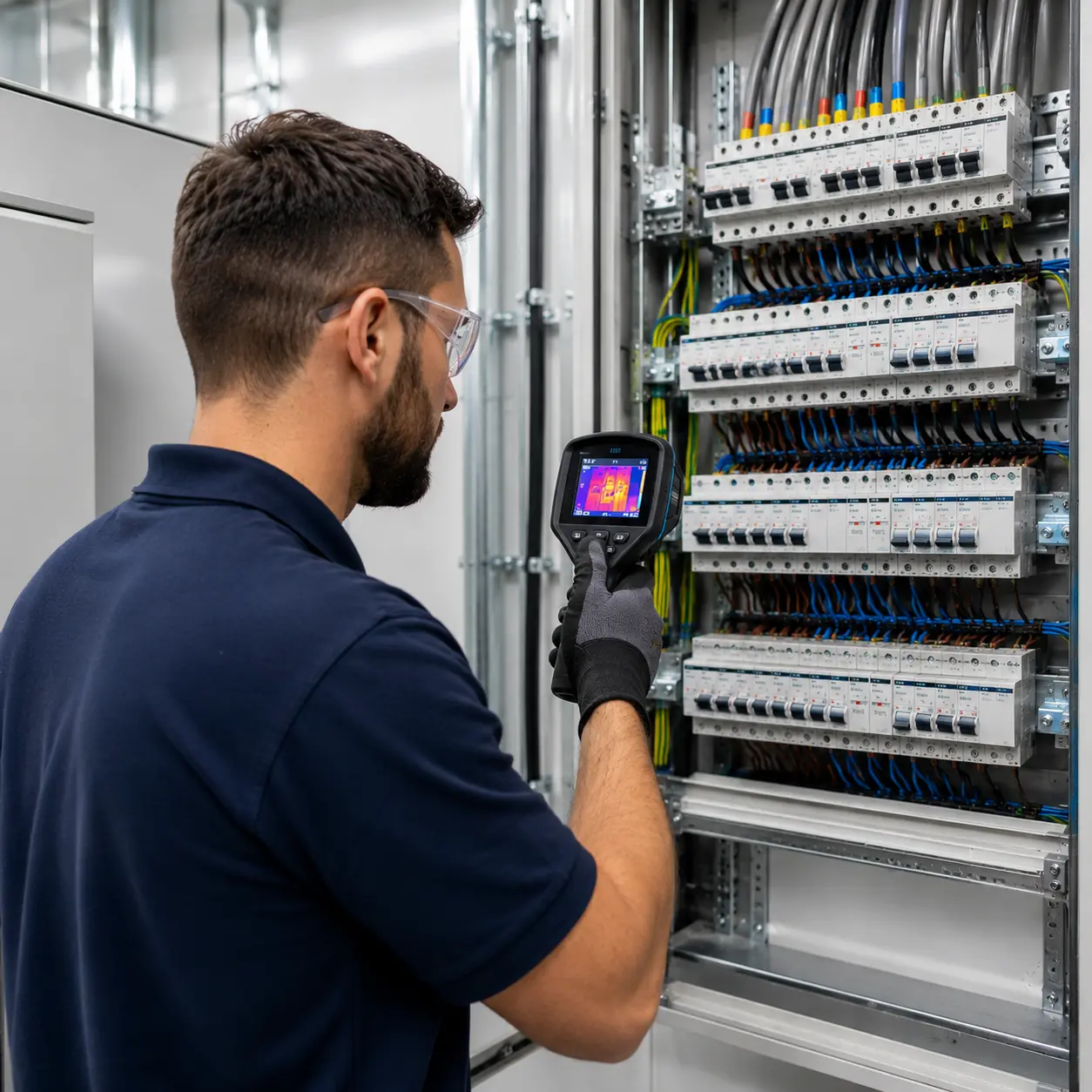
The distribution board is where the entire electrical system is managed, so it receives close attention during any inspection. Inspectors look for signs of heat damage, discolouration around terminals, and loose or corroded connections. Each circuit breaker is checked for the correct rating, and every circuit should be clearly labelled. Older boards lacking modern protective devices may need replacing entirely, particularly in older commercial buildings that have not been updated in many years.
Wiring, Cabling, and Concealed Installations
The condition of the wiring throughout the premises tells you a great deal about the overall health of the installation. Inspectors examine cable runs for damage, signs of overheating, and inappropriate routing. They also check the integrity of insulation, particularly in older buildings where rubber or fabric-covered cabling may still exist. Any wiring that no longer meets safety expectations should be replaced before it causes problems.
Sockets, Switches, and Power Points
Sockets take constant abuse in commercial settings, especially in offices and hospitality venues. Each one is checked for secure mounting, correct polarity, and freedom from heat damage. Sockets that feel loose, look scorched, or are placed too close to water sources are flagged for replacement. The inspector will also evaluate whether the number and placement of sockets actually suit the working environment, since overcrowded outlets and trailing extension leads are a constant problem in busy premises.
Lighting Installations and Emergency Lighting
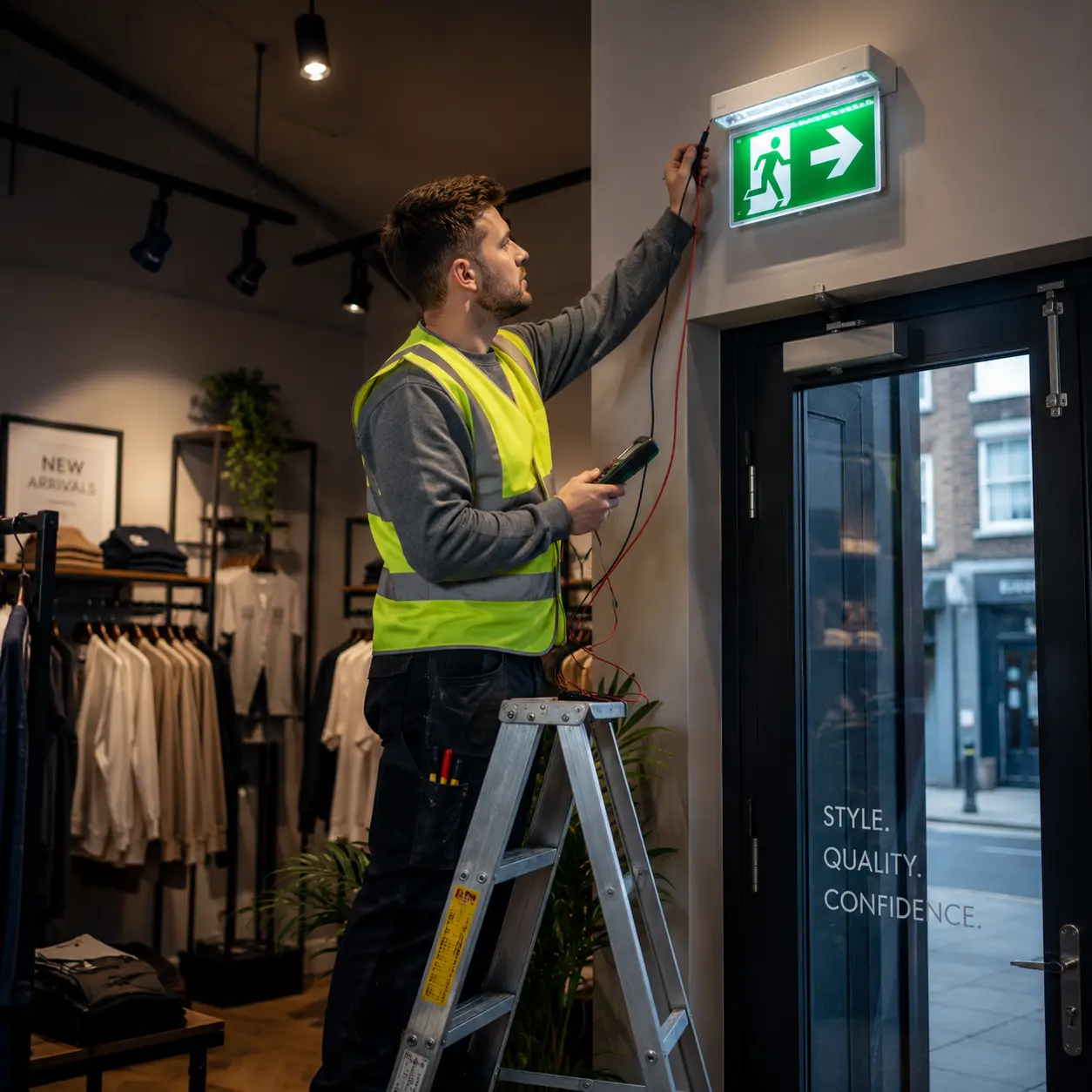
Commercial lighting is heavily used and tends to develop faults at the fittings and connections rather than the bulbs themselves. In premises using adjustable lighting systems, dimmer installations should also be checked to ensure safe operation and compatibility with connected fittings. Emergency lighting deserves particular focus, as these fittings must operate reliably if normal power fails. Each unit is tested for sufficient illumination duration, correct positioning along escape routes, and a healthy battery condition. Where emergency lighting falls short, replacement is essential to maintain a safe environment for staff and visitors.
Hard Wired Equipment and Fixed Appliances
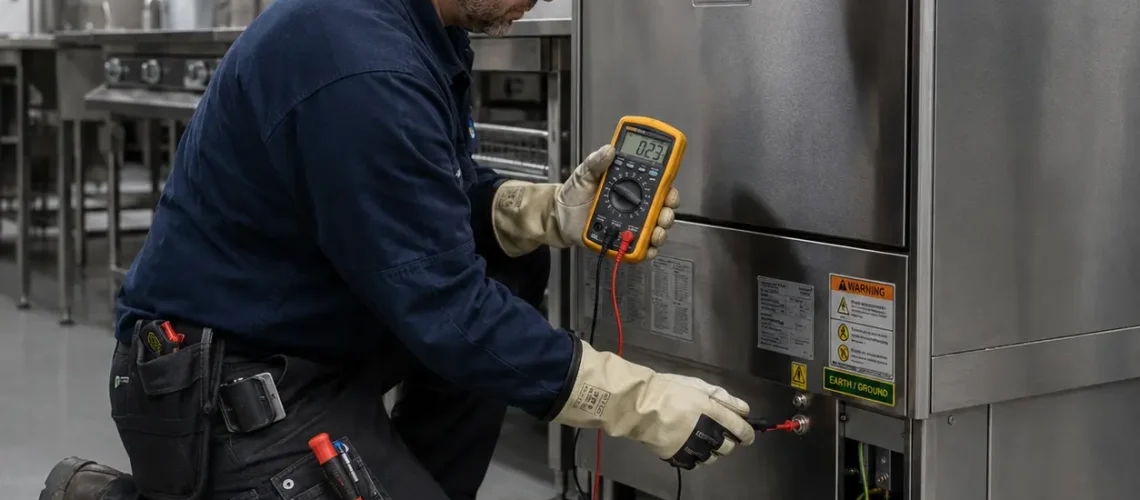
Machinery, commercial kitchen equipment, and other fixed installations all need careful checking. Each piece of equipment is examined for safe wiring, adequate earthing, and proper isolation. Where portable appliance testing is appropriate, this should form part of an ongoing maintenance schedule with proper records kept. Faulty isolators or missing labels are common findings that can be quickly addressed during the inspection.
Earthing, Bonding, and Protective Conductors
A reliable earthing and bonding arrangement remains a critical part of any commercial electrical installation. During inspections, electricians verify the continuity of protective conductors throughout the premises and assess supplementary bonding around exposed metal services, including pipework, containment systems, and structural steelwork. In older commercial buildings, bonding arrangements are often found to have deteriorated, been altered during refurbishment work, or no longer meet current installation standards, requiring remedial action to restore proper continuity and compliance.
Residual Current Devices and Safety Switches
RCDs form an important part of commercial electrical protection systems and are tested during inspections to confirm they disconnect power within the required response times under fault conditions. Installations lacking appropriate RCD protection on relevant circuits are typically flagged for upgrade, particularly in environments exposed to moisture, heavy equipment use, or increased operational demand.
Fire Detection, Smoke Alarms, and Surge Protection
Fire detection systems form an integral part of any commercial electrical inspection. Smoke alarms, heat detectors, and connected fire alarm panels are tested for functionality and correct interlinking. Surge protection devices are also reviewed, as protecting sensitive equipment such as computers, payment terminals, and machinery from voltage spikes is increasingly important for modern businesses.
Load Balancing and Energy Efficiency
A thorough inspection also looks at how electrical demand is distributed across circuits. Poor balancing can lead to frequent tripping, equipment running hotter than it should, and unnecessarily high running costs. The inspector may recommend redistributing circuits, adjusting how equipment is used, or upgrading the supply if demand has outgrown the existing capacity. Improvements in this area often deliver real savings on energy bills.
Common Issues Found During Commercial Inspections
Even premises that appear well maintained often reveal surprises once a thorough inspection is carried out. Frequent findings include hidden electrical faults caused by overloaded circuits, outdated distribution boards, missing or incorrect labelling on circuits, evidence of overheating around terminals, exposed cabling in storage areas, and damaged sockets in heavily used zones. Older commercial buildings often show signs of deteriorated earthing or bonding that has been affected by years of alterations, refurbishment work, or increased electrical demand.
Other recurring issues include overloaded staff kitchen circuits, extension leads supplying multiple tills or workstation setups, and emergency lighting systems that no longer maintain the required illumination duration during power loss. Identifying and resolving these problems early helps reduce operational disruption, equipment downtime, and the higher costs associated with reactive electrical repairs.
Why Working With a Qualified Professional Matters
Commercial electrical inspections require expertise that goes well beyond general residential work. The scale, complexity, and regulatory expectations placed on business premises mean that engaging an experienced electrical contractor is essential. A qualified professional will carry out the inspection thoroughly, document every finding clearly, prioritise remedial actions, and provide the certification you need for insurance and compliance purposes.
Rose Electrical works with business owners, landlords, and property managers across the UK to deliver comprehensive inspections tailored to each premises. Whether you need a periodic inspection, ongoing maintenance support, or remedial work following a previous report, our team brings the experience and reliability your business deserves.
Conclusion
A well planned commercial electrical inspection is one of the most valuable investments a business can make. It protects staff and customers, prevents costly downtime, and provides the documentation needed to keep your operation running smoothly. If your premises have not been inspected recently, or if any signs of electrical wear have appeared, get in touch with Rose Electrical. Our team will assess your installation thoroughly and recommend a sensible course of action tailored to your business.
