Introduction
Few household moments are as universally familiar as the lights flicking off without warning. Your first instinct is usually to glance at the kettle, then the neighbour’s window, then the consumer unit. Knowing the difference between an electrical fault vs power cut helps you respond the right way, protect your appliances, and avoid unnecessary worry. This guide brings together insights from experienced emergency electricians to untangle what each situation actually involves, the warning signs that distinguish one from another, and the practical steps every UK household should know. Whether the trouble lies inside your walls or somewhere on the wider network, understanding the difference makes all the difference
Why Telling These Situations Apart Is So Important
A power cut and an internal electrical issue can look identical for a few moments, yet the right response to each is completely different. Mistaking a fault for an outage may leave a real problem running quietly in the background, while assuming an outage is your responsibility wastes time and creates stress. Reacting correctly from the start protects your equipment, keeps your household safe, and helps you contact the right people without delay.
This matters even more when the weather turns. UK winters bring storms, fallen trees, and high winds that regularly affect overhead supply lines. Damp conditions also encourage faults to develop inside garden lighting, outdoor sockets, and bathrooms. Knowing how to recognise the source of the problem becomes a genuinely useful household skill rather than something best left to electricians alone.
What Happens During a Power Cut
A power cut occurs when the supply to your home is interrupted before it ever reaches your consumer unit. The cause sits firmly outside your property, somewhere within the wider network managed by your distribution operator. Storms, vehicle collisions with overhead poles, transformer failures, and scheduled engineering works are some of the most common reasons. In each case, your installation is functioning perfectly. It simply has no electricity flowing in.
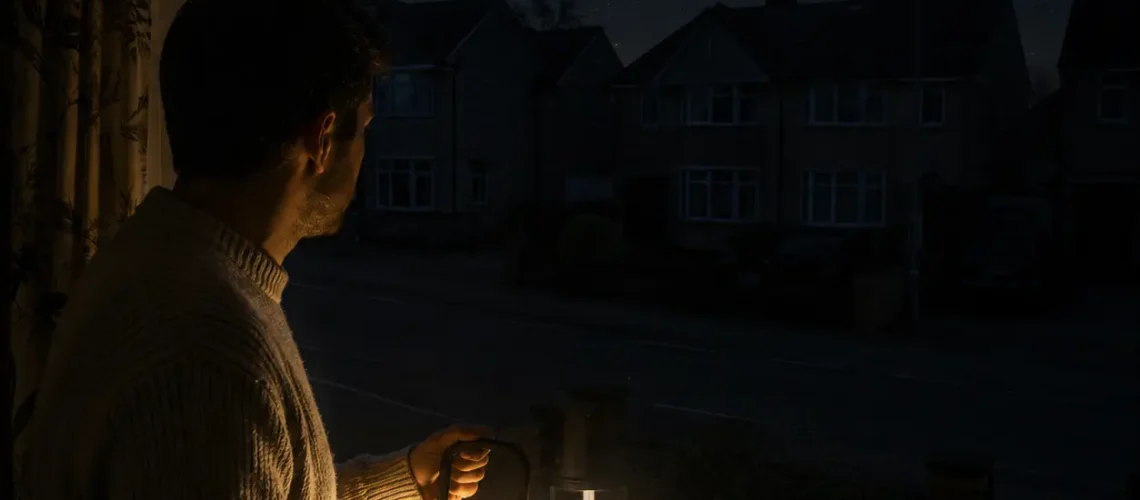
The hallmark sign is total loss. Lighting, sockets, the heating system, your internet router, and even your doorbell all stop together. A quick look outside often confirms it. If streetlights are dark and neighbouring windows are unlit, the issue is clearly affecting more than just your home. Reporting it through your distribution network operator is the next sensible step.
What an Electrical Fault Looks Like
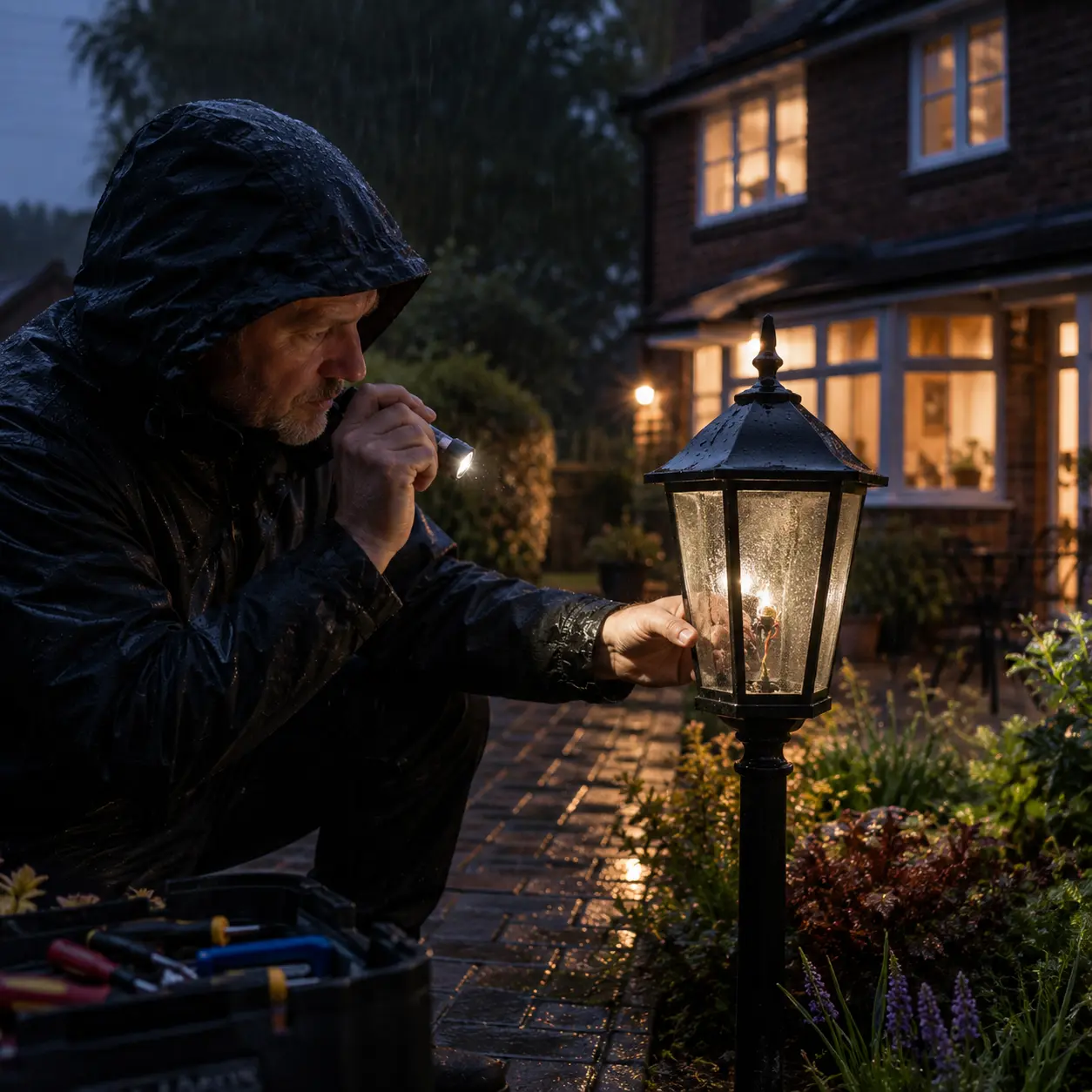
An electrical fault originates within your own installation. Something inside the home has developed a problem, and the safety systems built into your consumer unit have responded to keep you safe. The cause might be a damaged cable behind a wall, a faulty appliance, a worn socket, or moisture finding its way into a fitting. In each case, the supply itself is fine, but something in the wiring or connected equipment is no longer working as it should. In larger or more heavily used properties, professional wiring inspections may be needed to identify overloaded circuits, ageing cabling, or hidden faults before they become more serious.
Faults rarely affect the whole house. Most commonly, a single room loses power, a particular circuit goes silent, or one specific socket refuses to work. Other rooms continue functioning as normal, and the lights in your street remain on. This pattern is the strongest indicator that the problem lies within your property rather than the wider network.
How a Tripped Circuit Fits In
A tripped circuit sits in a different category from a true fault. When something unusual happens within a circuit, the protective devices inside your consumer unit react by cutting power to that specific area. The trip itself is not the fault. It is the safety response that prevents a fault from causing harm. Without that automatic shutdown, even minor issues could quickly escalate into serious incidents.
Trips can happen for relatively harmless reasons, such as a high-power appliance briefly pulling more current than the circuit allows. They can also occur in response to more concerning issues like water reaching electrical components or a damaged cable developing a leak to earth. Either way, the breaker has done its job by acting before any damage could occur.
What Can Cause an Electrical Circuit to Trip
UK households experience tripping circuits for a wide range of reasons. Overloaded sockets sit at the top of the list, particularly in lounges, home offices, and kitchens, where multiple high-power devices share the same outlet through extension leads. Faulty appliances also account for many unexpected trips. A worn washing machine motor, a damp iron, or an ageing kettle can leak small amounts of current that the RCD detects immediately. Damaged cables, loose socket terminations, and moisture entering bathroom or outdoor fittings are other common causes, especially during damp UK winters. Repeated breaker trips should never be ignored, as they usually indicate an underlying electrical fault that requires proper investigation.
Spotting Whether You Have a Fault, a Trip, or a Power Cut
The quickest diagnostic is simply observing how much of your home has lost power. If absolutely nothing works, including outdoor lighting, look beyond your front door. Dark streetlights and unlit homes nearby almost certainly indicate a wider outage. Working streetlights and lit neighbouring properties point firmly towards an internal issue that requires your attention.
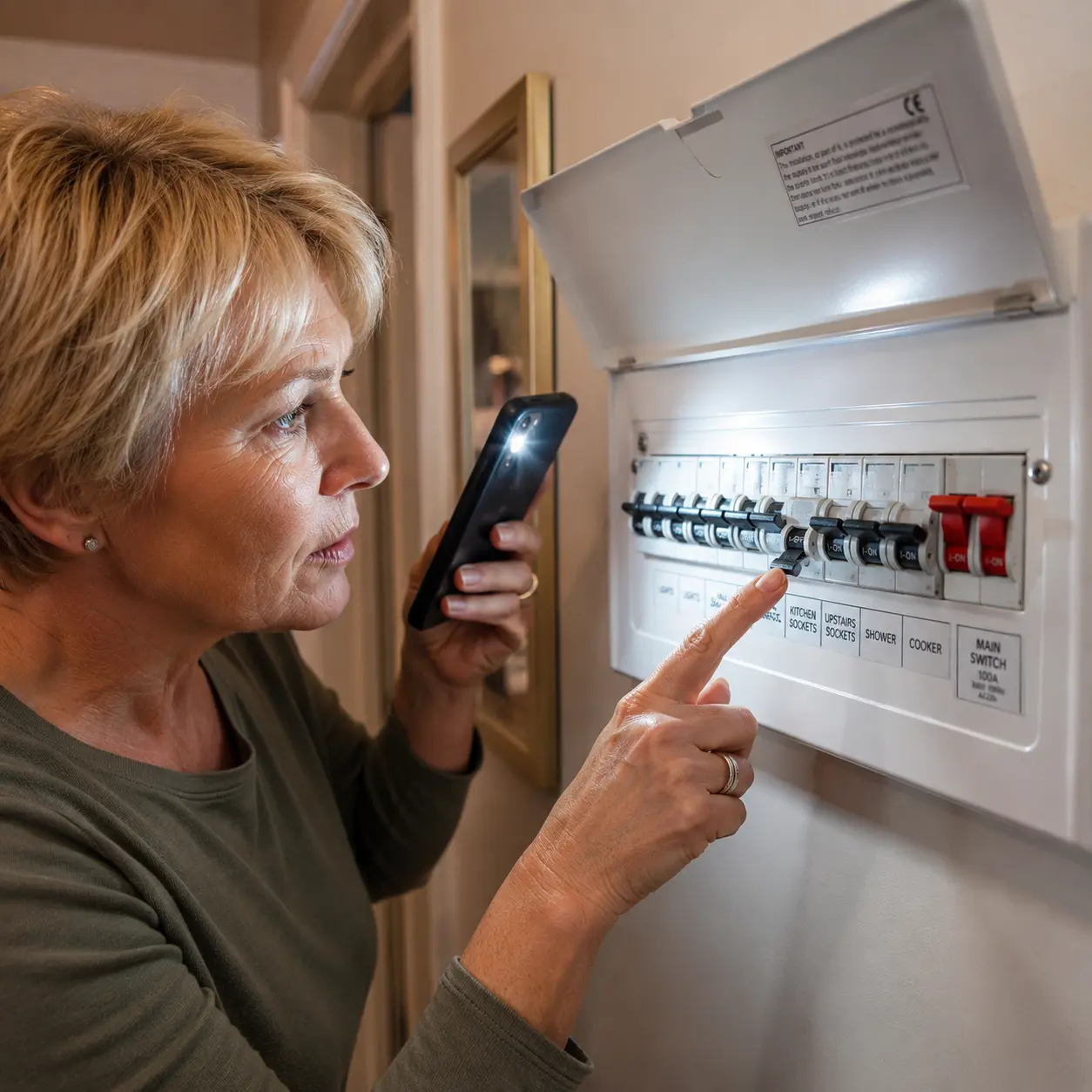
If only part of your home is affected, the consumer unit holds the answer. A switch that has moved to the off position confirms a tripped circuit, and the surrounding label usually identifies which area has been disconnected. If everything in the consumer unit appears normal yet a particular room or socket remains dead, the problem may sit deeper within the wiring or a specific fitting, which calls for inspection by a qualified electrician rather than further guesswork.
What to Do When a Circuit Trips at Home
The first step is to unplug any appliance you were using on the affected circuit just before the trip occurred. Then visit the consumer unit and reset the relevant switch. If the switch holds, the trip may have been a one-off response to a momentary issue, and you can carefully reintroduce devices to identify which one caused the trouble. If the breaker trips again as soon as it is reset, do not keep trying. That repeated reaction signals an underlying issue that needs proper investigation by someone qualified to diagnose it safely.
When Professional Help Becomes Essential
Some signs warrant an immediate call to an experienced electrician. Burning smells from sockets, switch plates that are warm or discoloured, sparking when you plug something in, repeated tripping after a reset, or any visible damage to wiring all need urgent attention. The same applies if your consumer unit feels hot, hums oddly, or shows scorch marks anywhere on its surface. Call a qualified electrician, never attempt live electrical work yourself.
Conclusion
The difference between an electrical fault and a power cut really comes down to where the problem actually sits. A power cut affects the wider network and resolves itself once the supplier restores the supply. At the same time, an internal fault or trip happens inside your home and almost always needs investigation before normal use can safely resume. If you find yourself uncertain or if the same issue keeps returning, get in touch with Rose Electrical. Our team will diagnose the cause properly and return your installation to safe, reliable working order without delay.
