Introduction
Most homeowners give very little thought to the wiring running through their walls until something goes wrong. Electrical wiring does not last forever, and an ageing or deteriorating system can present serious safety risks long before any visible damage appears. Knowing the warning signs that your home needs electrical rewiring could prevent a minor fault from becoming a genuine hazard. If your property is showing any of the following indicators, arranging a professional assessment sooner rather than later is the right move.
1. Frequent Circuit Breaker Trips
A circuit breaker that trips occasionally is simply doing its job. One that trips regularly is telling you something more serious is wrong. Persistent tripping usually points to an overloaded circuit, a short circuit or a fault within the wiring itself. If resetting the breaker has become routine, the underlying cause needs proper investigation rather than repeated resetting, which only increases risk over time.
2. Flickering or Dimming Lights
Lights that flicker or dim without explanation are rarely a bulb issue. More often, they indicate loose wiring connections, a failing circuit or an electrical system struggling to meet modern demand. This is particularly common in older UK properties where the original wiring was installed to support far fewer appliances than a typical household uses today. Flickering across multiple rooms is a clear prompt for a wiring inspection.
3. Discoloured or Scorched Sockets and Switches
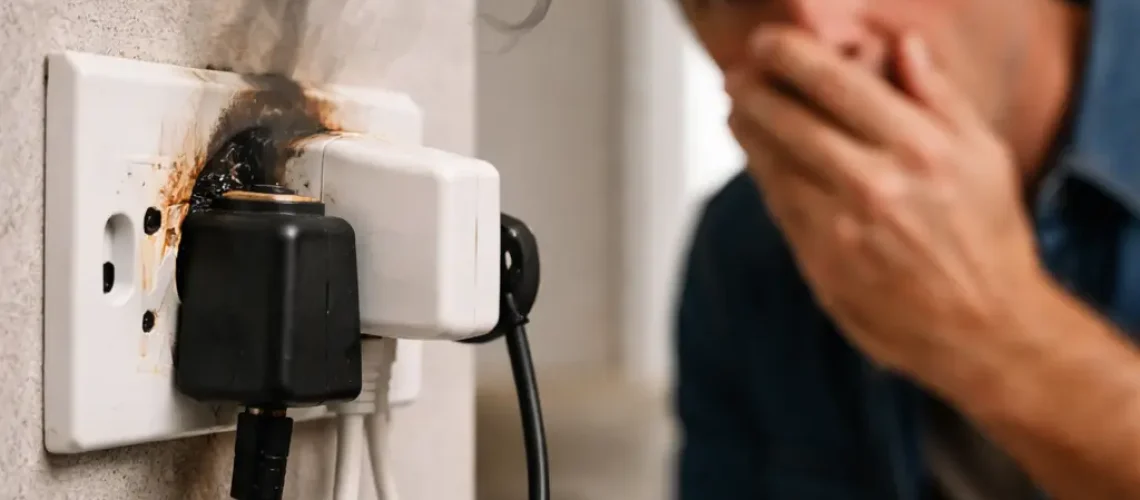
Burn marks, discolouration or melted plastic around sockets and switches should never be ignored. These point to overheating caused by loose wiring connections, faulty socket connections or electrical arcing within the fitting. Scorched outlets are a direct indicator of electrical fire risk, and any visible burning or heat damage around your fittings warrants an immediate call to a qualified electrician.
4. A Burning Smell with No Obvious Source
A persistent burning smell that cannot be traced to an appliance strongly suggests that wiring is overheating somewhere within a wall or ceiling cavity. The smell may be intermittent, which makes it easy to dismiss, but that would be a mistake. If you notice an acrid smell near sockets, switches or your consumer unit, treat it as urgent and contact Rose Electrical straight away.
5. Buzzing or Crackling Sounds
A properly functioning electrical installation is silent. Buzzing, crackling or sizzling from outlets or switches indicates loose wiring, faulty connections or arcing within the fitting. Arcing generates intense heat and is a well-established cause of electrical fires in domestic properties. These sounds need professional investigation, not monitoring.
6. Warm or Vibrating Wall Plates
Sockets and switch plates should never feel warm under normal conditions. Warmth or vibration suggests excessive current passing through the wiring or a loose connection generating heat within the fitting. This points to wiring deterioration that will worsen without attention. If any fittings feel warm to the touch, even occasionally, have them assessed by a qualified electrician.
7. Frequently Blown Fuses
If individual fuses blow repeatedly or your fuse box requires regular attention, the wiring may no longer handle the electrical load placed on it safely. Older properties with original fuse boxes rather than modern consumer units with RCD protection are especially vulnerable. This often points to the need for a consumer unit upgrade alongside rewiring work.
8. Electric Shocks from Appliances or Sockets
Even a mild electric shock when plugging in an appliance or touching a socket should not be dismissed. It suggests faulty earthing, loose wiring or a fault within the circuit allowing current to travel where it should not. Any instance of this warrants an immediate call to a qualified electrician rather than a wait-and-see approach.
9. Sparking Sockets or Deteriorated Cables
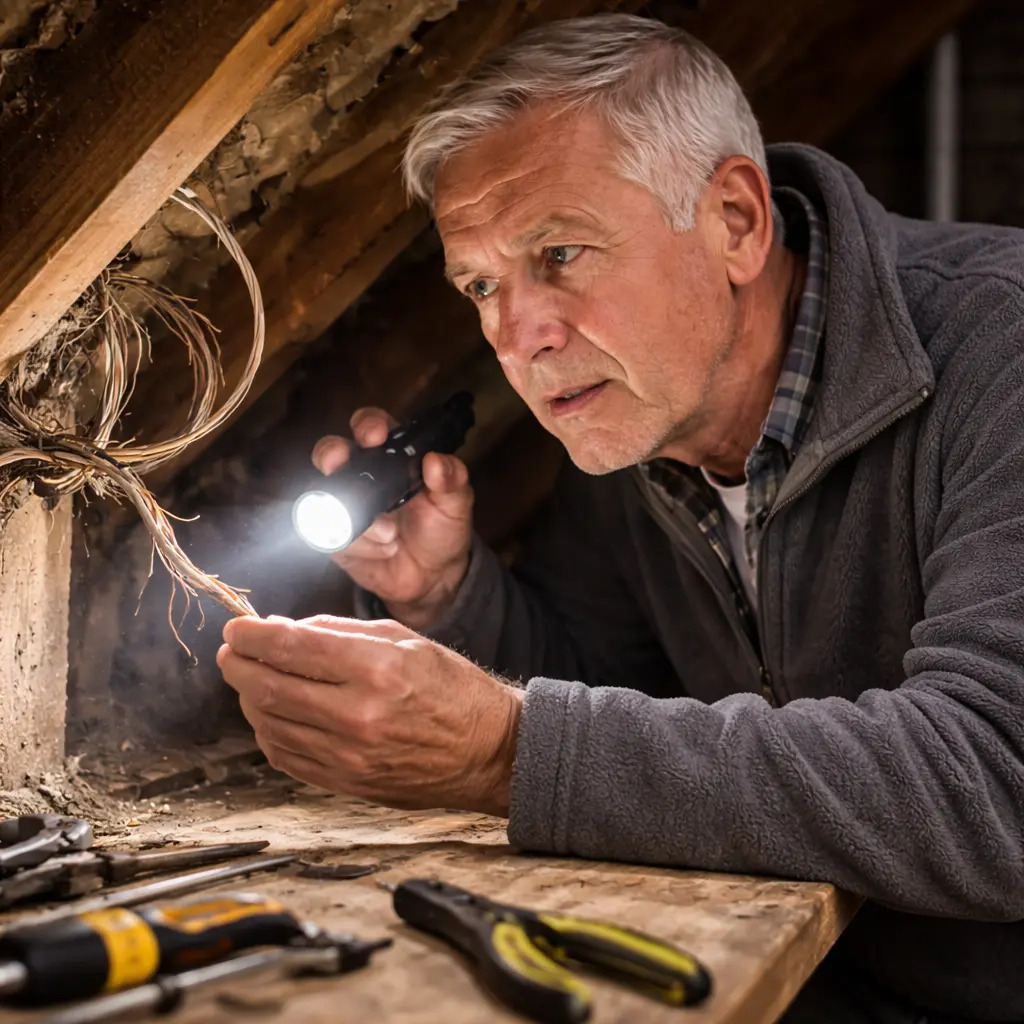
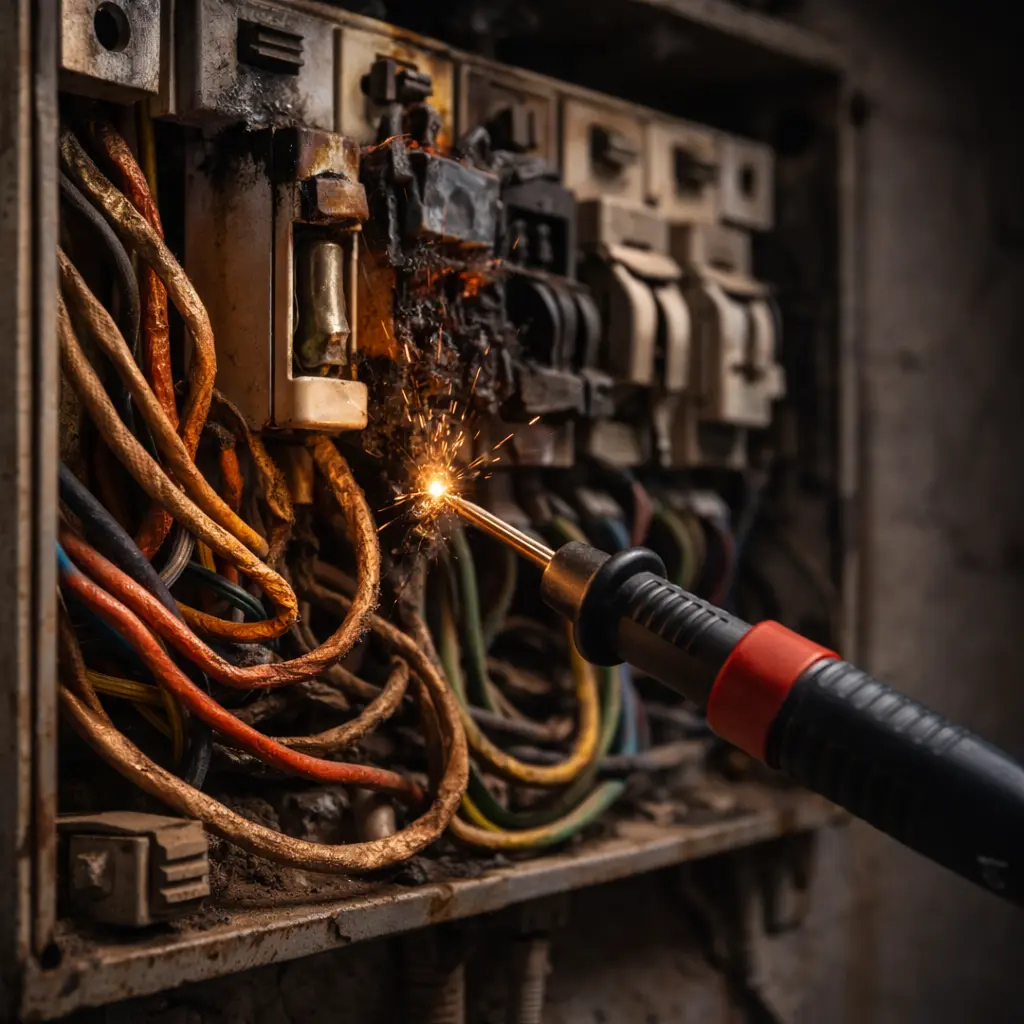
Visible sparks when inserting a plug, frayed cables or wiring with cracked or brittle insulation all indicate an installation approaching the end of its safe working life. Fabric-insulated wiring, which remains present in some older properties, is particularly prone to deterioration and lacks the protective characteristics of modern wiring. Physical damage to cables anywhere in the home should be treated as urgent.
10. Overreliance on Extension Leads and Multi-Plugs
A permanent arrangement of extension leads and overloaded power strips throughout the home creates real circuit overload risk. It suggests the electrical system was never designed to support modern appliance loads. Occasional use is normal, but if adaptors have become a fixture in every room, additional circuits and sockets installed as part of a rewiring project are the proper long-term solution.
Does My House Need Electrical Rewiring?
If your property is showing several of the signs above, a professional inspection is necessary first step. A qualified electrician will assess the condition of your wiring and advise whether a full rewire, partial rewire or targeted repairs are appropriate. Properties that have never been rewired or those with outdated wiring types, such as rubber-insulated or fabric-covered cables, should be treated as a priority. Rose Electrical carries out thorough home wiring assessments and will give you clear, honest guidance on what your property actually needs.
How Long Does an Electrical Rewire Take?
The timescale depends on the size of the property and the extent of work required. A full rewire of an average-sized home typically takes several days, with larger properties requiring longer. A qualified electrician will assess your home and provide a clear outline before work begins, so there are no surprises along the way.
Conclusion
Ageing or faulty wiring is a genuine safety risk that no homeowner should leave unaddressed. The warning signs are often subtle at first, but rarely stay that way. Acting early is always less disruptive and less costly than waiting for a more serious fault to develop. If your home is showing any of the signs covered here, Rose Electrical is ready to help. Get in touch today to arrange a professional inspection and find out exactly where your home stands.
