
Introduction
Demand for residential cooling has grown rapidly across the UK as summers become noticeably warmer and indoor temperatures harder to manage. Many homeowners are now choosing to install air conditioning, but few realise just how much electrical preparation sits behind a successful fit. Cooling systems pull significant current, and your home’s wiring must be ready to handle that demand safely and consistently. Choosing expert electrical services for air conditioning gives you confidence that every detail is handled correctly, from supply assessments to dedicated circuits, ensuring the finished installation performs reliably and meets every UK safety standard.
Why Air Conditioning Demands Careful Electrical Planning
A cooling unit is among the most power-hungry appliances you can fit in a typical British home. Unlike a kettle or washing machine that draws power briefly, an air conditioner often runs for hours during warm spells. That continuous draw places real pressure on your wiring and consumer unit. Without proper preparation, you risk repeated faults, premature wear, and serious safety issues including overheated cables, damaged insulation, and unexpected electrical faults that could eventually develop into an electrical emergency.
This is exactly why preparation matters so much. Before any unit goes on the wall, an experienced electrical professional should evaluate your property’s electrical capacity, identify weak points in the existing setup, and confirm that everything aligns with current BS 7671 wiring regulations. Skipping this step almost always leads to problems further down the line.
Assessing Your Property’s Electrical Supply
Every successful installation begins with a thorough assessment of your home’s existing electrical infrastructure. Older British properties, particularly those built before the 1980s, often have wiring that was never designed to support modern high-draw appliances. Even more recent homes can have panels that are already close to full capacity.
During an assessment, your installer will examine the condition of your mains power supply, the available panel headroom, the integrity of existing circuits, and the quality of your earthing connection. An EICR is often the most practical way to gauge whether your installation can handle additional demand. If the supply is insufficient, a panel upgrade or consumer unit replacement may be recommended before fitting can begin.
Rose Electrical regularly carries out these assessments for homeowners considering new appliances. A short inspection at the planning stage saves considerable cost and frustration later.
Understanding the Power Demands of Different Cooling Systems
The electrical work involved varies depending on the type of unit you select. Smaller, portable models plug into a standard 13 amp socket and rarely need specialist wiring. However, fixed installations such as wall mounted split systems, multi room setups, and ducted whole house cooling carry much higher demands.
Portable units sit at the lower end of the scale, typically suiting single rooms or short term use and running comfortably from a standard socket without any additional wiring work. Wall mounted split AC units represent a step up in complexity, well suited to bedrooms, lounges, and home offices. However, they require a dedicated circuit to handle the prolonged power demand they place on your supply. Multi split arrangements, which cool several rooms across one property, demand a higher capacity circuit and often call for a panel upgrade depending on existing supply margin. At the top end of the scale, ducted central cooling designed to manage the climate across an entire property places heavy electrical demand on the system. It frequently requires a full service upgrade before installation can proceed safely.
The right choice depends on your property layout, expected usage, and the spare capacity within your existing supply. A competent installer can match the system to your home rather than forcing your home to accommodate the system.
Core Electrical Components Involved in Installation
Several key parts work together to deliver safe, stable power to a cooling unit. Each performs a defined function within the installation.
The dedicated circuit sits at the heart of the system. It ensures the AC has uninterrupted power without competing with other appliances. Sharing a circuit is one of the most common causes of repeated tripping and premature wear on protective devices.
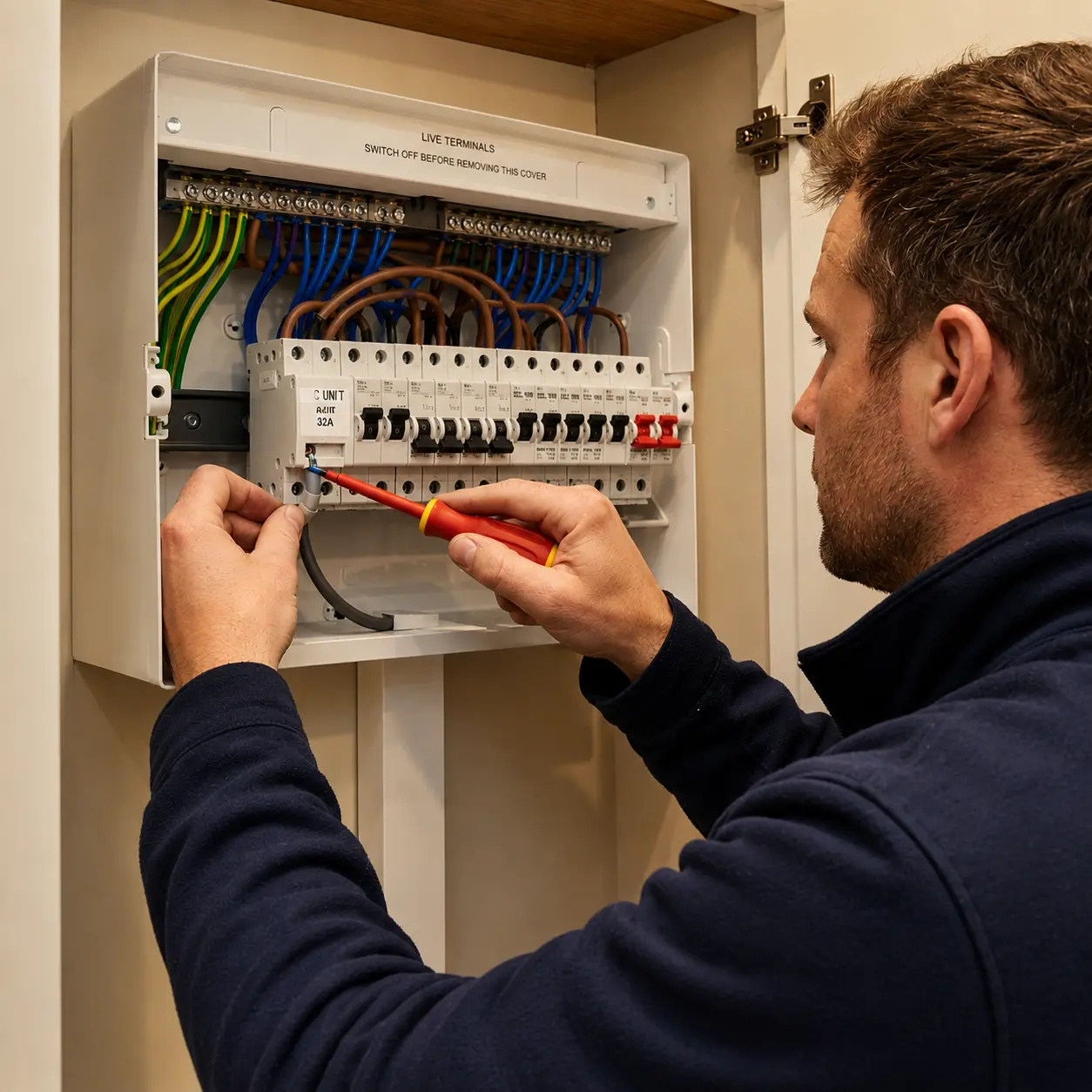
A correctly rated MCB or RCBO is installed in the consumer unit, providing overload and fault protection suited to the electrical demand of the system. The cable run between the panel and the appliance must use copper wiring of the correct gauge, sized to match the unit’s amperage. Undersized cables can overheat under sustained load, eventually leading to insulation damage or circuit failure.
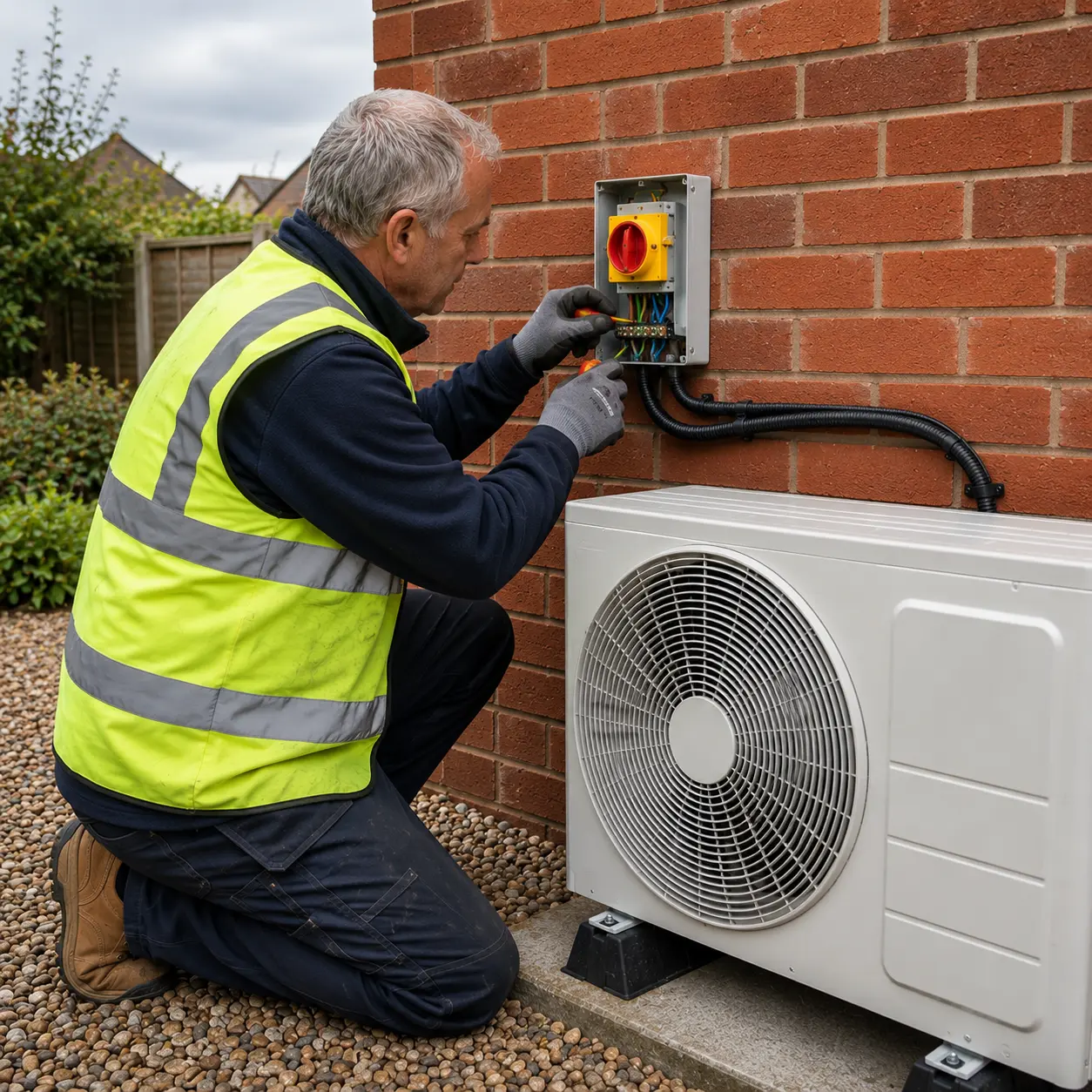
An external isolator switch is fitted close to the outdoor condenser. This allows engineers to safely shut off power during maintenance or repairs without affecting the rest of the property. Weatherproof fittings are essential here, particularly in exposed outdoor locations subject to regular UK rain and damp conditions.
Thermostat wiring runs at low voltage and carries control signals between the indoor and outdoor units. While the current is relatively small, the connections must still be neat, secure, and properly terminated to avoid intermittent faults and communication issues between system components.
The Wiring Process Explained
A typical professional installation follows a clear sequence designed to maintain safety throughout. The work begins by isolating the mains at the consumer unit, ensuring no power reaches any component during fitting. A new MCB or RCBO is then installed and clearly labelled.
Once the breaker is in place, cabling runs from the consumer unit out to where the outdoor isolator switch will be fitted, taking the most direct path while staying properly protected along the way. Where cables pass through walls or external spaces, conduit and weatherproof fittings shield them from physical damage and moisture ingress. The isolator is mounted securely, with sufficient clearance for safe access.
From there, the outdoor condenser is wired to the isolator using outdoor rated cable. The indoor unit is connected, thermostat wires terminated, and the earthing connection verified across the entire setup. Before powering up, the electrician performs full safety testing, including insulation resistance, earth continuity, and polarity checks. Only once every result falls within acceptable limits is the unit commissioned.
The Critical Role of Earthing
Earthing protects both people and equipment, making it one of the most important parts of any air conditioning installation. The earth wire provides a controlled path for stray current in the event of an internal fault, preventing the metal casing of the unit from becoming live and creating an electric shock risk.
Proper earthing also helps protect modern inverter driven air conditioning systems from voltage fluctuations and power surges, particularly during periods of stormy UK weather. Without safe bonding and earthing, sensitive electrical components inside the system can become vulnerable to long term damage or sudden failure.
Common Electrical Mistakes Worth Avoiding
Some of the most frequent issues found during inspections of poorly fitted systems include cables sized incorrectly for the load, isolator switches positioned in inaccessible locations, missing or compromised earthing, and circuits shared with other heavy appliances. Each of these issues can shorten the lifespan of your AC and create avoidable safety risks.
Other recurring problems include loose terminations that overheat over time, omitted weatherproofing on outdoor connections, and informal repairs by anyone other than a competent professional. The reassurance of knowing the work has been done correctly by a professional electrician simply cannot be overstated, particularly when the system needs to perform reliably for years to come.
When Professional Help Becomes Essential
Under UK building regulations, any new circuit installation must be carried out by a professional electrician. This is not optional. If your existing panel lacks capacity, your wiring shows signs of age, or your AC trips the circuit repeatedly after fitting, expert intervention is needed without delay.
If you are planning to install air conditioning at your home or commercial premises, Rose Electrical is here to help. Our experienced team handles everything from initial assessments and consumer unit upgrades through to dedicated circuit installation and final commissioning, all delivered to current UK standards.
Conclusion
A successful air conditioning installation depends almost entirely on the quality of the electrical work that supports it. Sound preparation, correctly rated components, proper earthing, and compliant wiring together create a system that performs reliably year after year. Without these foundations, even the most expensive unit will struggle. If you are considering cooling for your property, speak to Rose Electrical first. Our team will assess your supply, recommend the right approach, and complete the work safely, leaving you with the comfort you can genuinely rely on.
