Introduction
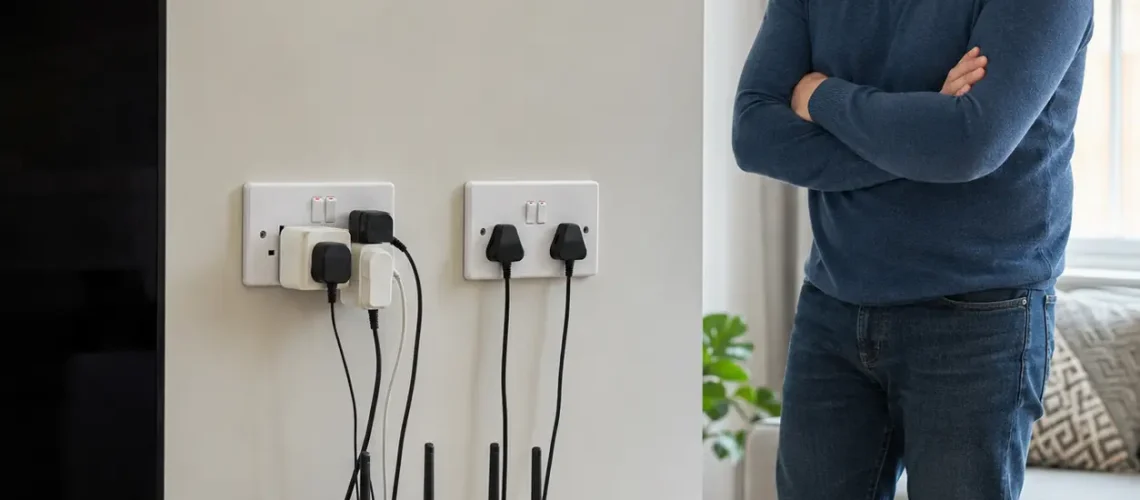
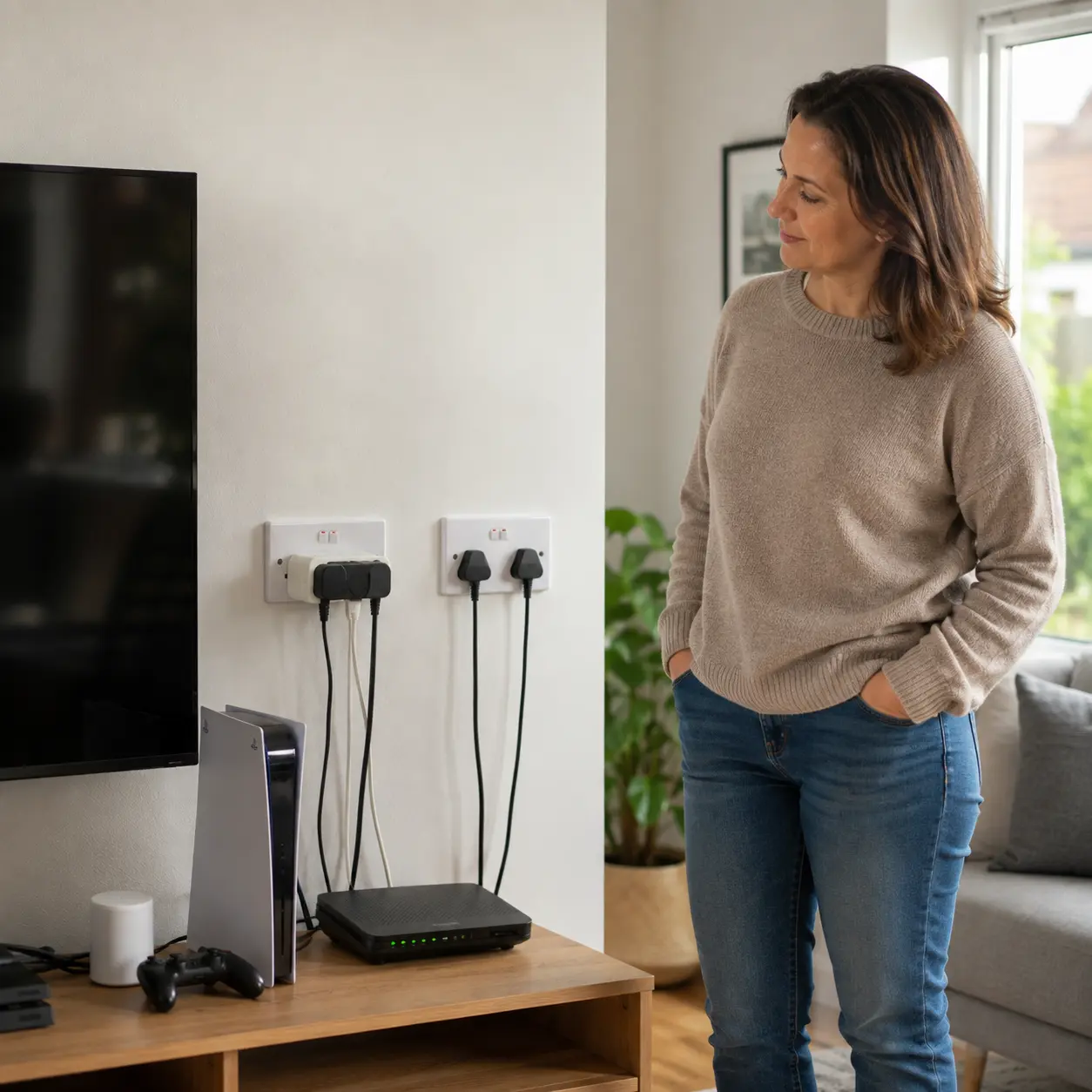
A homeowner recently realised they had a problem in their living room: the television, router, games console and several chargers were all being powered from one single socket using adaptors. When they considered replacing it with a double socket, it seemed like a simple way to create more space for plugs. However, the type of socket, the existing wiring and the electrical load all matter before making the change.
If you are deciding between a single socket vs double socket, the wider faceplate is not automatically the better choice. In this guide, we explain the key differences between the two, how much load a socket can safely handle, where each type is suitable and what to consider before replacing one. If you are unsure which socket option suits your home, a Doncaster electrical specialist can assess the existing wiring and advise on the safest option.
The real difference between single and double socket
Both types are made to BS 1363, so both take the same three-pin plug and sit on the same household circuits. A single has one outlet on a narrow faceplate. A double has two outlets side by side on a wider plate, usually around 146mm across.
Inside, the difference is more meaningful. A double electrical socket has two sets of contacts feeding from one shared set of terminals, so it is not the same as two separate singles fitted next to each other. That shared connection is what decides how much you can reasonably run from that one position.
Why a double electrical socket does not double the power available
Each plug can have a fuse rated up to 13A, which can make it seem as though a twin socket provides 26A. It does not work that way. A double socket has a combined current rating, so the two outlets share the capacity of the same accessory rather than providing two completely separate 13A supplies.
For everyday items this is a non-issue. A television, a lamp, a router and a couple of chargers together draw a small fraction of that figure.
The issue becomes more important when two high-demand appliances are used from the same double socket. A fan heater alongside a kettle, for example, can place a substantial load on the socket. If the socket or its connections are already damaged or loose, this can contribute to overheating. Warmth around the faceplate, a smell of hot plastic or brown marks near the pins are the early signs of electrical socket getting hot , and they mean you should stop using it and have it inspected.
Rooms where a double socket is better than single
Living rooms are the obvious case, because the device count around a media unit only ever goes up. Fitting doubles there removes the trailing extension lead, which is usually the bigger safety issue.
Home offices behave the same way. A laptop, monitor, printer and desk lamp on one wall are all low-draw items, so they suit a twin outlet well.
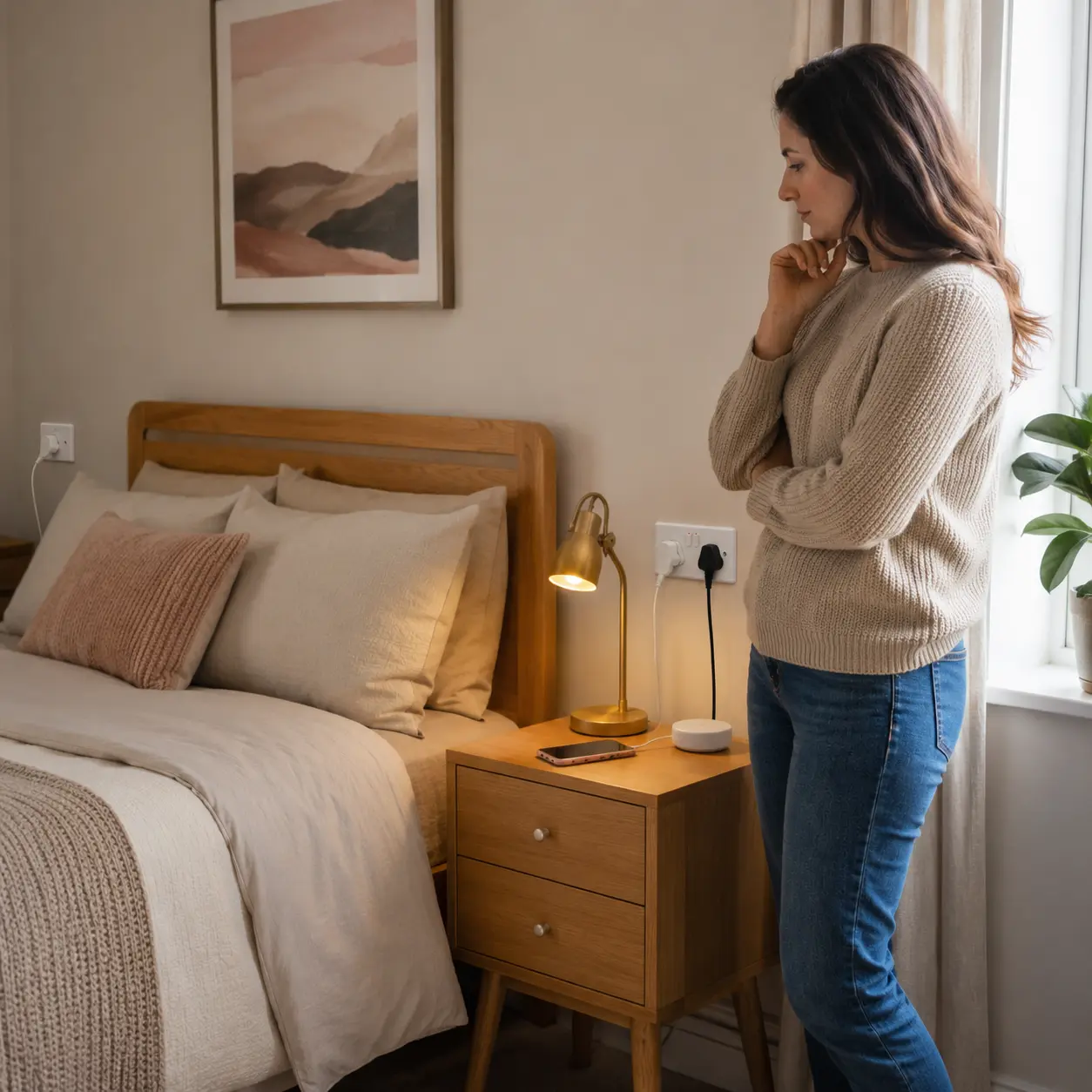
Bedrooms benefit too, particularly either side of a bed where chargers and lamps compete for one point. Kitchens are the exception worth flagging: fit plenty of outlets, but spread the heavy appliances across separate plates rather than pairing two of them on one.
When a single socket is still the better choice
Fixed appliances often do better on their own. A fridge freezer, a washing machine or a boiler control fed from a dedicated single is far less likely to be unplugged by someone hunting for a spare outlet.
Space is the other deciding factor. Behind a door swing, on a narrow return wall or on boxed-in pipework, a wider plate may not sit flat against the surface.
There is also a visual argument in period rooms and hallways, where a single outlet is less intrusive on a feature wall. Our team at Rose Electrical is often asked to reduce socket clutter rather than add to it, and singles in the right places do that job.
What double socket installation involves
Backbox Depth and Wall Type
Single sockets commonly use a 25mm backbox, while double sockets usually require a 35mm box to accommodate the wiring safely. Changing from a single to a double socket may involve enlarging the recess or using a converter box. Plasterboard walls use boxes with retaining lugs, while masonry walls require a metal box fixed into the brick or block.
The Circuit Behind the Socket
UK sockets are commonly installed on a 32A ring circuit using 2.5mm cable, although 20A radial circuits are also used. An unfused spur can supply only one single socket, one double socket or one fused connection unit. If more capacity is needed, additional circuit work may be required. For accessibility, sockets in new homes are generally positioned between 450mm and 1200mm above floor level.
Switched, unswitched, single pole and double pole
A switched faceplate lets you isolate an appliance without pulling the plug out, which is convenient for kettles, toasters and anything left plugged in permanently. Unswitched plates are often chosen behind fixed appliances so nobody turns them off by accident.
Most domestic switched sockets are single poles. The switch breaks the live conductor only, and the neutral stays connected. Double pole switching breaks live and neutral together for fuller isolation, which is why it appears more often in commercial and specialist settings.
Neither type replaces proper isolation at the consumer unit before any work is carried out.
Safety rules that apply to socket work in UK homes
Current wiring regulations require additional protection by a 30mA RCD for socket outlets rated up to 32A intended for general use in homes. That same device is why a fault elsewhere can take your sockets out with it, and an extractor fan tripping the electrics is one of the more common examples, because a single RCD often covers more than one circuit on a split load board. Older installations without that protection should be assessed rather than simply extended.
Notification rules vary across the UK. In England, adding a socket to an existing circuit is usually not notifiable, except in certain locations such as rooms containing a bath or shower. Different requirements apply in Wales and Scotland.
Once installed, the socket must be tested for faults such as reversed polarity, loose terminals and high earth loop readings. As this work involves electrical circuits, it should be completed by a qualified electrician.
Conclusion
There is no single correct ratio of single and double sockets for every home. The right choice depends on what each wall position needs to support: multiple low-power devices generally suit double sockets, while fixed appliances and tight spaces may be better served by singles.
Rose Electrical carries out socket and wiring repairs for homes across Doncaster and can advise on what your existing circuits can safely support.
