
Introduction
Ceiling fan problems tend to creep up gradually, and knowing how to read them makes all the difference. Fans are valued in many UK homes for the comfort and steady air circulation they provide, particularly during warmer spells and in rooms that struggle with stuffiness. Most are reliable for years, but no fan runs forever without the occasional hiccup. Some faults are minor and easily sorted, while others point to an electrical issue that deserves proper attention. If you are unsure whether a problem is mechanical or electrical, seeking professional electrician services in Doncaster can help identify the cause before the issue becomes more serious and ensure any repairs are carried out safely. This guide walks through the faults you are most likely to encounter, explains what you can safely check on your own, and sets out clearly when it is time to call in a qualified professional.
Why Ceiling Fans Develop Faults
A ceiling fan combines moving parts with electrical components, so wear is only natural over time. Years of constant spinning create vibration that can gradually loosen screws, blades and fittings. Dust builds up on the blades and inside the motor housing, which affects both balance and performance. Ageing components such as worn motor bearings eventually make themselves known too. None of this is unusual, and a little regular maintenance keeps most fans running smoothly for far longer.
Mechanical Problems You Might Notice
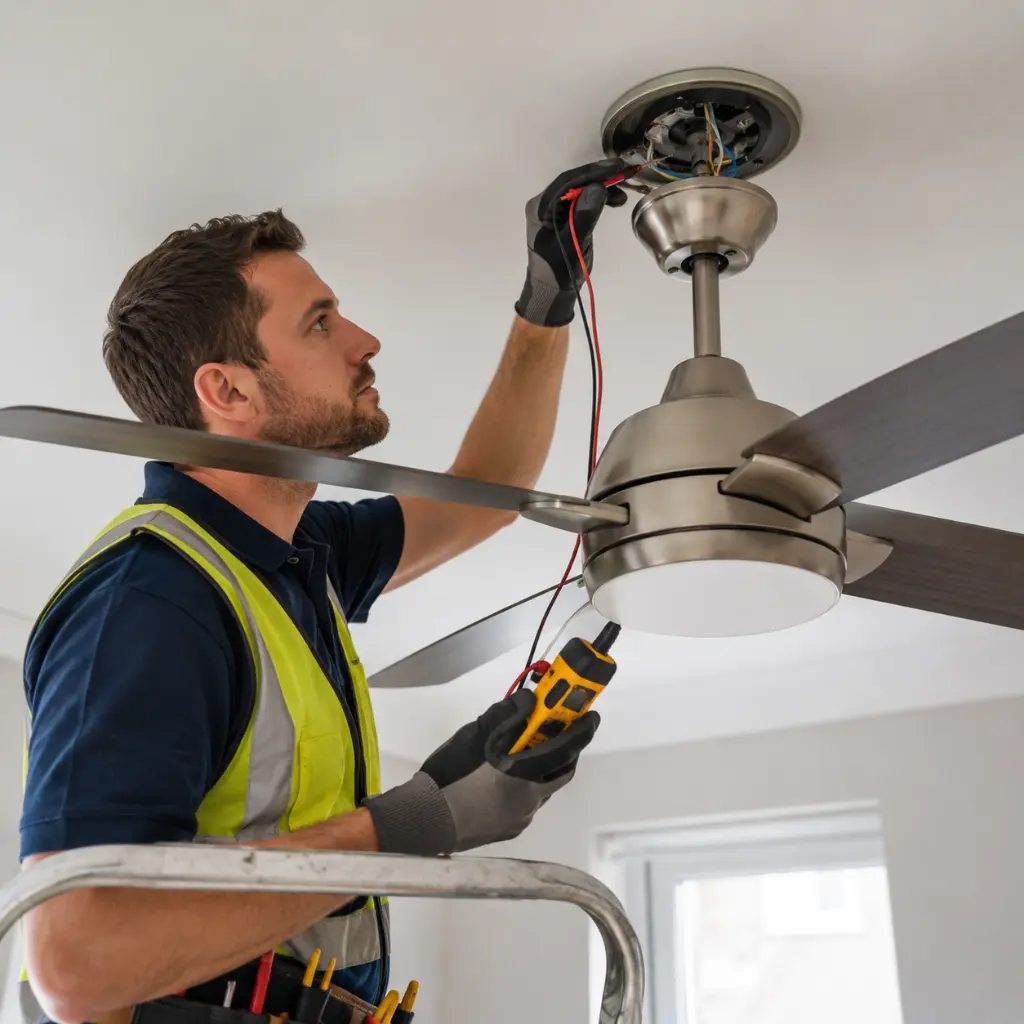
Many faults are mechanical rather than electrical, and these are often the easiest to spot. Recognising them early can make a straightforward ceiling fan repair far simpler.
Wobbling or Unsteady Movement
A wobbling fan is one of the most common complaints. It usually comes down to blades that have fallen out of balance or mounting screws that have worked loose with constant use. A warped or slightly damaged blade can throw the whole fan off as well. Gentle tightening and a balancing kit often resolve it, but a persistent wobble is worth investigating before it stresses the fitting.
Noises While Running
A fan should run with little more than a soft whir, so new sounds are worth paying attention to. A faint hum can suggest the motor is labouring, while rattling often points to loose screws or a slack blade. Clicking may mean a blade is catching, and a grinding or squeaking sound usually signals worn bearings inside the motor. Recognising the specific sound can help determine whether the issue is minor or requires further investigation.
Weak Airflow or Slow Speed
If your fan no longer moves air the way it once did, the cause is often gradual. A build-up of dust on the blades can affect their balance and reduce the fan’s overall efficiency. An ageing motor can also lose some of its strength over the years, leading to slower speeds and weaker circulation. A thorough clean frequently restores much of the lost performance, though a tired motor may simply be reaching the end of its working life.
Ceiling Fan Faults That Usually Require Professional Repairs
Some ceiling fan faults go beyond routine maintenance and usually require professional attention. A failed capacitor is one of the most common, often causing the fan to struggle when starting, run slowly or stop altogether. Loose fan wiring can also create intermittent operation, unexpected shutdowns or flickering integrated lights.
A faulty bulb does not always cause problems with built-in lighting. Damaged wiring, failed light components, or a defective wall controller may prevent the light from operating correctly. Overheating motors deserve particular attention, especially if accompanied by a burning smell, buzzing noises or excessive heat around the fitting.
In older fans, repeated electrical faults can make replacement a safer and more cost-effective option than ongoing repairs.Should any of these symptoms appear, it is best to stop using the fan and arrange a professional inspection to ensure it remains safe.
What You Can Safely Check Yourself
Plenty of basic checks are perfectly safe to handle on your own, provided the fan is switched off first. A few simple steps cover most everyday niggles:
- Clean the blades to remove dust and improve performance
- Check for any visibly loose blade screws or fittings
- Check that the wall switch is working and replace the remote control batteries
- Confirm the circuit breaker has not tripped at the consumer unit
Anything beyond this is best left alone. Opening up the fitting, handling the internal wiring or working on the connection itself should always be carried out by a professional, as live components carry a serious risk.
When to Call an Electrician
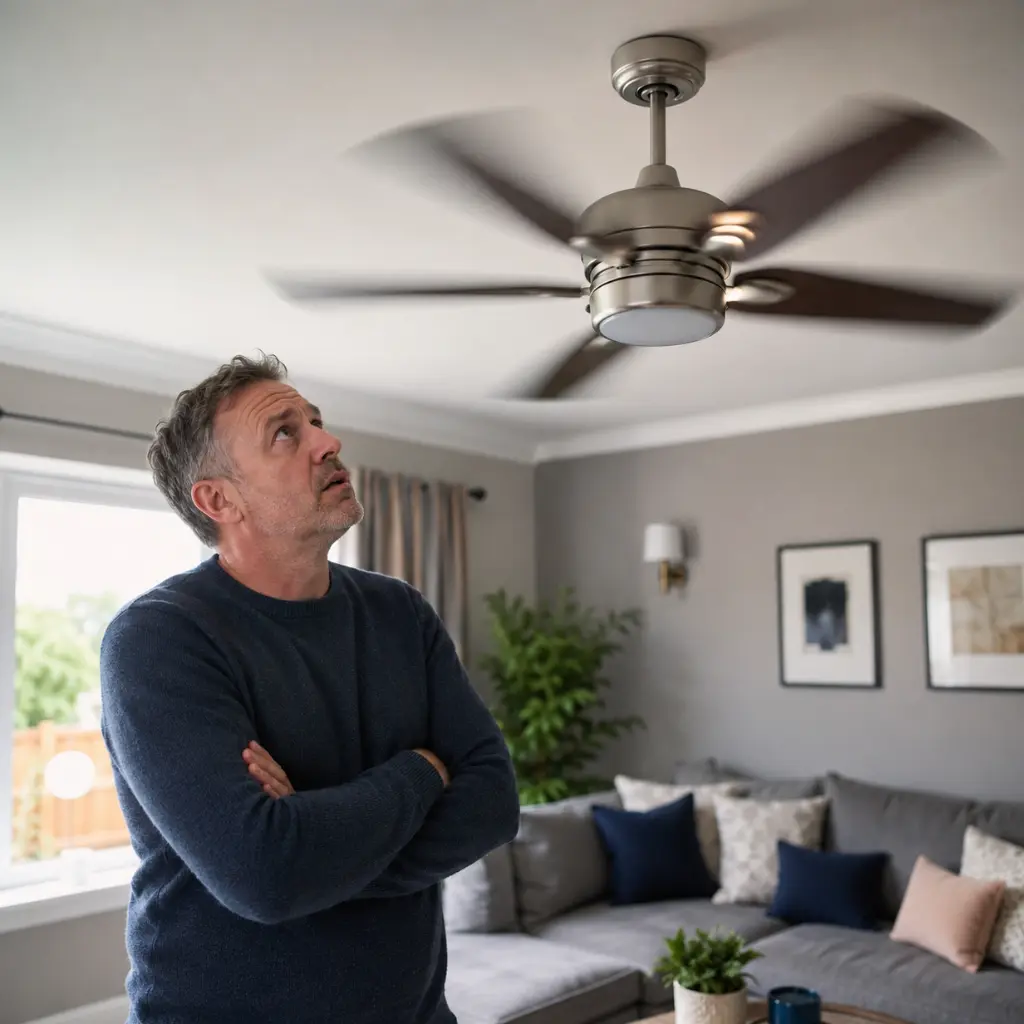
Certain symptoms are a clear signal to bring in expert help. A burning smell, scorch marks, repeated breaker tripping, exposed or damaged wiring, or any persistent electrical fault all warrant a proper inspection. Live wiring work and replacing a fan fitting are not DIY jobs, however confident you might feel, because the risk of shock or fire is too great to take lightly. An electrician for ceiling fan repairs can trace the fault, check for loose electrical connections and confirm the circuit is sound, giving you peace of mind that the fan is safe to run again. If any of this sounds familiar, Rose Electrical is on hand to help.
Keeping a Fan Running Well
A little routine care goes a long way towards avoiding problems in the first place. Wiping the blades regularly and giving the fan an occasional once-over helps you catch small issues early. It also pays to recognise when an ageing fan is past its best, as repeated repairs on a tired unit rarely make sense. When the time comes for a replacement, professional ceiling fan installation ensures the new fan is mounted securely and wired correctly, leaving it balanced, safe and ready to keep you comfortable.
Conclusion
Most ceiling fan problems are minor and easily managed, from a wobble or a buildup of dust to a flat remote battery. Others, such as burning smells or repeated tripping, point to electrical faults that deserve immediate and professional attention. Knowing the difference helps you act sensibly and keep your home safe. If your fan is showing signs of trouble that go beyond a simple clean or tighten, Rose Electrical is always happy to help with repair, inspection or installation.
