Quick Summary
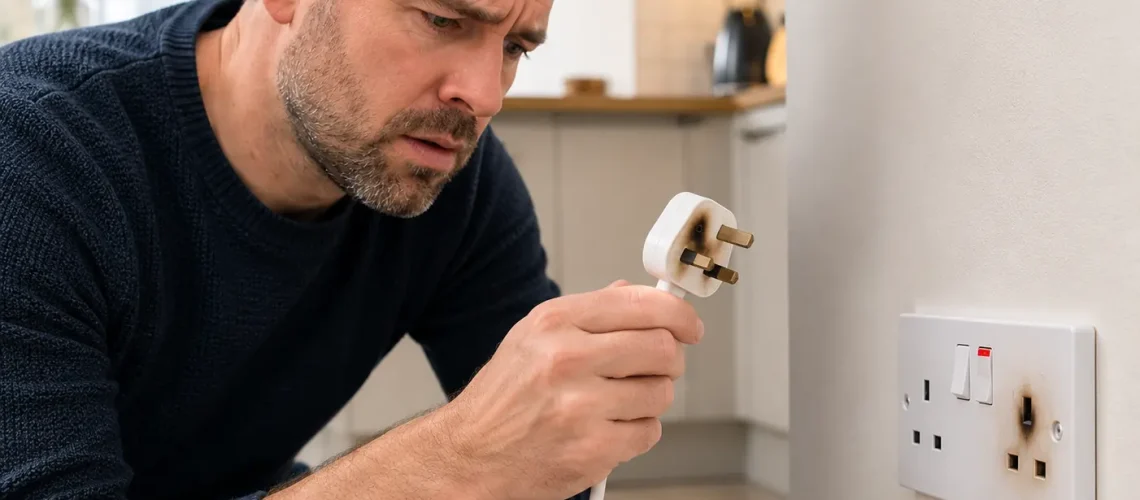
If you notice an electrical socket getting hot after unplugging a tumble dryer, fan heater or another high-power appliance, switch it off and stop using it until the circuit has been checked. Heat at the socket can point to a loose connection, worn contact or another electrical fault rather than a problem with the appliance itself. The sections below explain the difference between normal warmth and a potential fault, what to do first, which warning signs need immediate attention and what can cause heat to build up behind the faceplate. If you notice a socket becoming unusually warm or showing signs of damage, a qualified electrician in Doncaster can inspect the socket and wiring to identify the cause safely.
Warm Plug or Hot Socket? The Difference Matters
Some warmth is expected. Phone chargers, laptop power supplies and plug-in adaptors convert voltage and give off a little heat as they do it, so a charger that feels warm in the hand is usually behaving normally.
A 13A plug can also feel warm after a heater or kettle has been running for a while. Current passing through any connection produces a small amount of heat, and a heavy load over a long period makes that noticeable.
The faceplate is the part to pay attention to. A socket plate should sit close to room temperature, so heat in the plastic around the pin holes means energy is being lost at the connections behind it. If the socket is uncomfortable to touch, treat it as a fault rather than a quirk.
What to Do First When a Socket Feels Hot
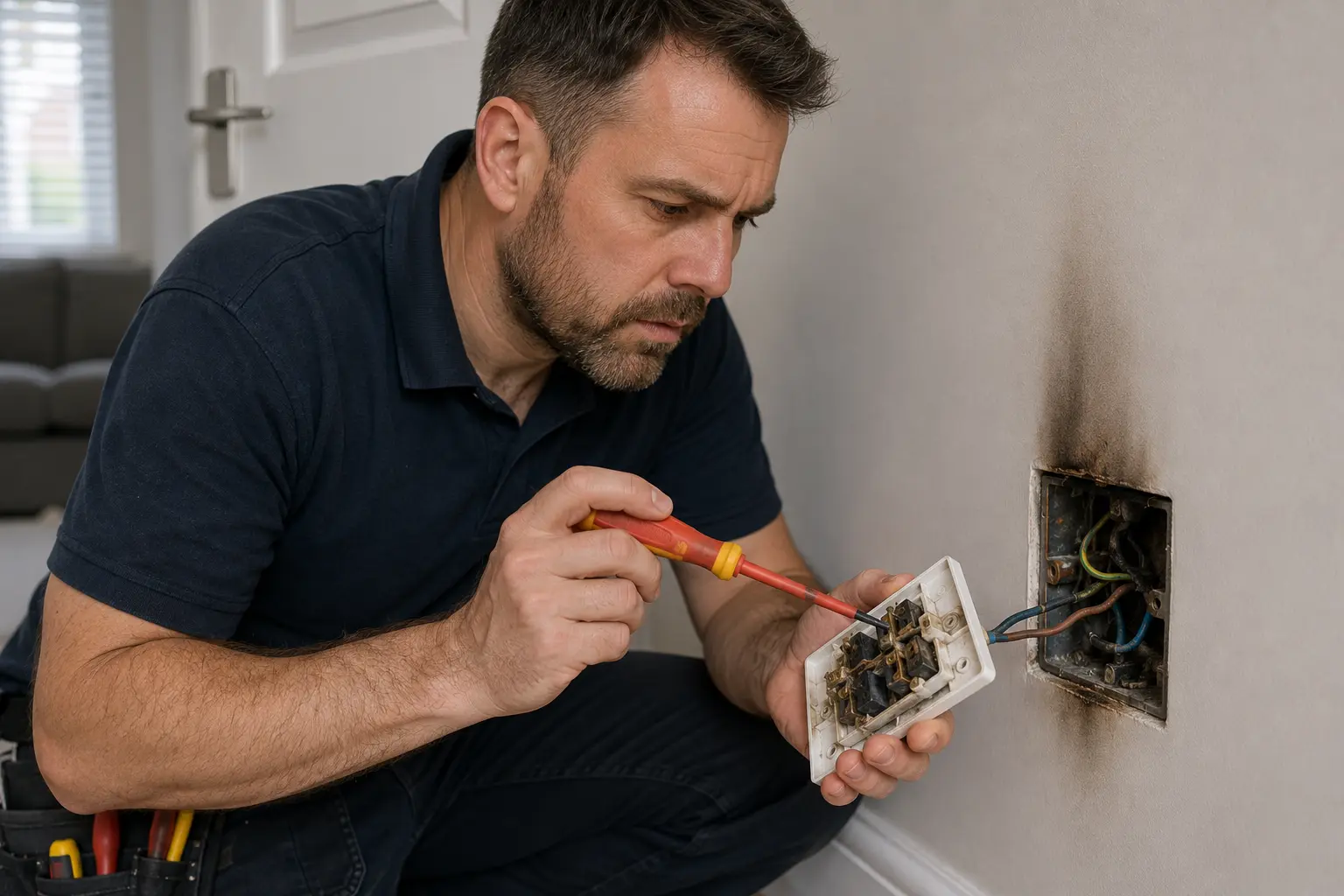
Switch the socket off at its own switch and remove the plug. If the plate is too hot to touch safely, turn off the circuit at the consumer unit first and leave the plug where it is.
Stop using that outlet, and do not simply move the plug to the other side of a double socket. Both outlets share the same connections behind the faceplate, so the fault has not gone anywhere.
Leave the faceplate alone. Live parts sit directly behind it, and removing it without isolating and proving the circuit dead is not something to attempt. Arcing can develop at that point too, which shows up as a faint buzzing or crackling, or as pitting on the pins themselves. Contacts cannot be re-tensioned, so a socket at this stage is replaced rather than adjusted.
Signs That Need Acting On Straight Away
Some symptoms move this from something to book in to something to deal with now.
- Brown or yellow discolouration around the pin holes, or on the plug pins themselves.
- A smell of burning plastic, sometimes described as a fishy smell, near the socket.
- Buzzing, crackling or sparking as a plug goes in or comes out.
- Plastic that has softened, melted or lost its shape on either the socket or the plug.
- A breaker or RCD that trips whenever a particular socket is used.
Why Is My Electrical Socket Getting Hot?
Several different faults produce the same hot electrical socket, and they are not equally serious. Working out which one you have is a testing job rather than a guessing job.
Loose or Deteriorated Connections
Terminal screws behind the faceplate can work loose over the years as the connection heats and cools. A loose joint has higher electrical resistance, and resistance turns current into heat at that exact point.
The same happens at connections elsewhere on the circuit. Most UK homes use a ring final circuit, and a loose or broken connection in the ring can leave one section carrying far more current than the design intended.
This is the fault that concerns electricians most, because it rarely trips anything. The current stays within the breaker’s rating, so nothing cuts out and the heating quietly continues.
Sustained High Loads
Heaters, tumble dryers, kettles and portable air conditioners draw close to the full 13A of the socket for long stretches. Older sockets with worn contacts struggle with that more than new ones do.
Twin sockets deserve a mention here. Many are not rated to supply 13A from both outlets at the same time for long periods, so plugging two heavy appliances into one double socket asks more of it than the design allows.
Worn Plugs and Sockets
The spring contacts inside a socket grip the plug pins. After years of plugging and unplugging, that grip weakens, and a loose pin makes poor contact, which again means resistance and heat.
Damaged pins, cracked plug bodies and unbranded adaptors do the same thing. Fuses matter too, and a fuse that does not carry the BS 1362 marking is not one to trust in a plug.
Damp and Corrosion
Garages, outbuildings and conservatories see condensation that indoor sockets never do. Moisture corrodes the metal contacts, corroded contacts conduct poorly, and poor conduction shows up as heat.
Overloaded Sockets, Adaptors and Extension Leads
Heat is also the honest response to asking one position to do too much. Where one position is doing most of the work, the difference between a single and double socket matters more than it first appears, because both outlets on a twin accessory share one set of terminals. Block adaptors stacked into one socket are worse again.
Older Installations
Some circuits carry loads they were never planned around, particularly where sockets have been added over time. Undersized cable, aged insulation and previous DIY work all raise the risk.
An old fuse board is worth attention in the same conversation. Rewireable fuses offer far less protection than modern breakers, and upgrading to a modern consumer unit is often part of putting an aging installation right.
Keeping Sockets From Overheating
- Give high-power appliances a socket of their own rather than doubling up on one outlet.
- Unwind extension reels fully before use, and choose a fused extension lead over a block adaptor.
- Replace sockets where plugs feel loose or fall out under the weight of their own flex.
- Match plug fuses to the appliance and buy BS 1362 fuses from a reputable supplier.
Periodic inspection catches what daily use hides. Owner-occupied homes are generally advised to have an Electrical Installation Condition Report around every ten years, while privately rented homes in England must be inspected at least every five years.
When to Call an Electrician in Doncaster
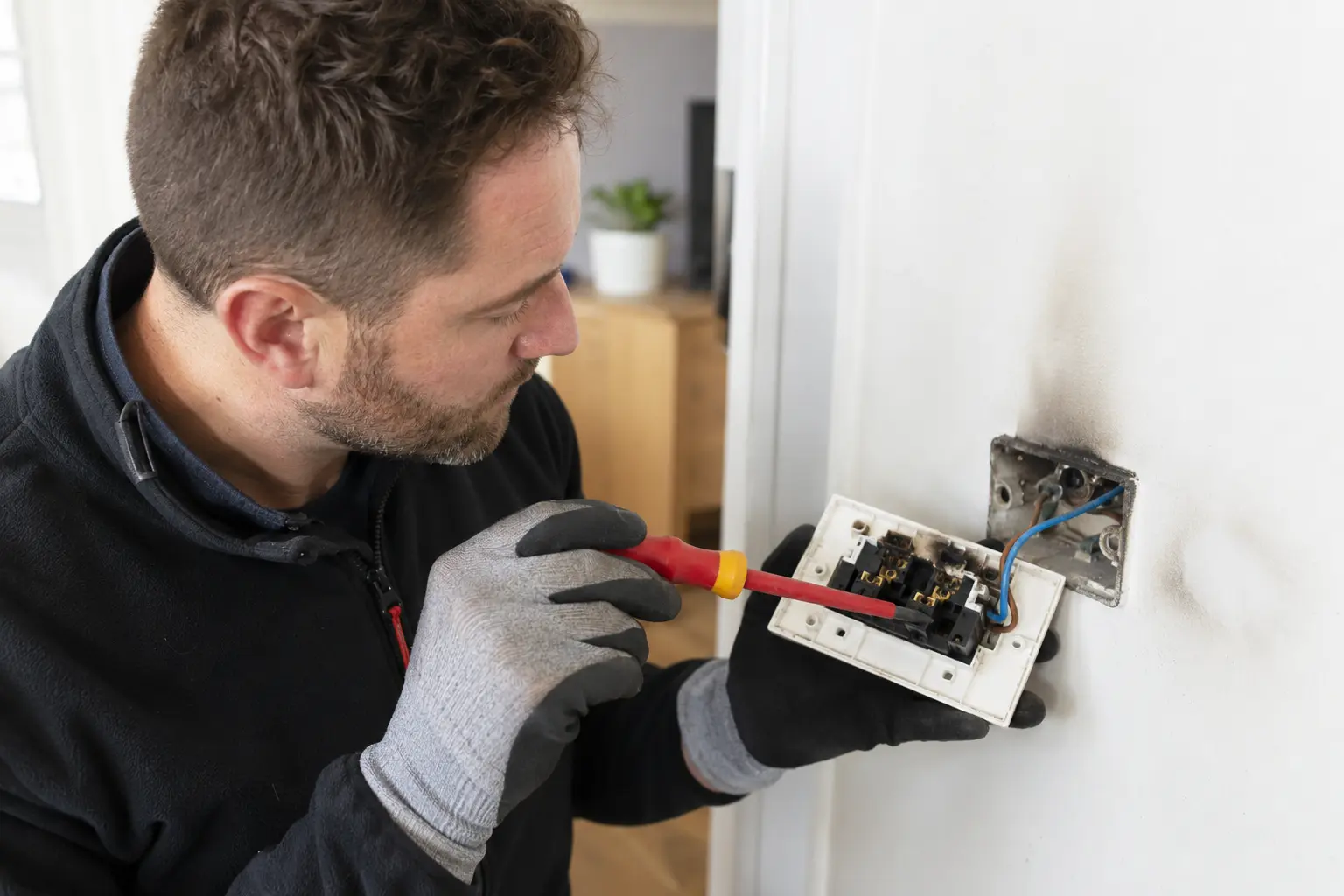
An electrical socket getting hot is worth investigating even when nothing has visibly gone wrong, because the connection faults behind it do not announce themselves by tripping a breaker.
Our engineers at Rose Electrical & Air Conditioning are City and Guilds qualified and CHAS accredited, and we test the circuit rather than replacing parts on a hunch. We work across domestic, commercial and industrial properties in and around Doncaster, with a 24-hour emergency line for faults that cannot wait.
If a socket in your home or premises has started running warm, arrange an electrical repair visit and we will look at the circuit properly before recommending anything.
