
At a Glance
Brightness is measured in lumens, whereas watts show how much electrical power the bulb requires to operate. Once you shop by lumens, matching the right brightness to each room becomes simple, and your lighting works beautifully.
Lumens and watts: why the label changed
You pop out for a replacement bulb, and the front of the box no longer lists watts the way it once did. Instead, the headline figure is lumens, so the old habit of reaching for a 60-watt bulb needs a small update.
Understanding lumens vs watts brings that choice straight back within reach. It also puts you in control of exactly how bright, warm and comfortable each space feels.
Fitting and upgrading lighting is everyday work for our qualified electrical team in Doncaster, so this is a question we happily answer all the time. Here is how to choose with confidence.
What is the difference between lumens and watts?
The easiest way to think about it is that each number answers a completely different question. One is about the light you see; the other is about the energy you use.
Lumens measure brightness
Lumens are the true measure of how much light a bulb gives out. A higher lumen figure means a brighter light, whatever technology sits inside the bulb.
This is the number to lead with when you are choosing a bulb. Decide how bright you want the space to be, then find the lumens to match.
Watts measure energy use
Watts tell you how much power a bulb draws. With older bulbs, higher wattage happened to mean more brightness, which is why people used watts as a shorthand for how bright a bulb was.
LEDs changed that happily in your favour. They produce a lot of light from very little power, so a low wattage can now deliver a bright, welcoming glow. Watts are still worth a glance, because they give you a feel for running costs.
A quick swap-out guide: LED lumens for old watts
If you are replacing traditional bulbs and want a similar brightness, these rough equivalents make life easy. Look for lumens in this sort of range:
- Around 450 lumens gives you the feel of an old 40-watt bulb
- Around 800 lumens matches a familiar 60-watt bulb
- Around 1,100 lumens steps up to a 75-watt level
- Around 1,600 lumens gives you a bright, 100-watt-style output
Keep this in mind, and any like-for-like swap becomes a two-second decision. The lovely part is that the LED version reaches that brightness while using a fraction of the power.
How much LED brightness do you need, room by room
Brightness is partly personal taste, and it also depends on the size of the room and what you do in it. As a rough guide, it helps to think in lumens per square metre.
Living rooms and bedrooms
These are spaces to relax, so a softer, cosier level suits them well. Somewhere around 100 to 200 lumens per square metre usually creates a warm, comfortable feel, often layered with lamps for extra flexibility.
Kitchens, bathrooms and home offices
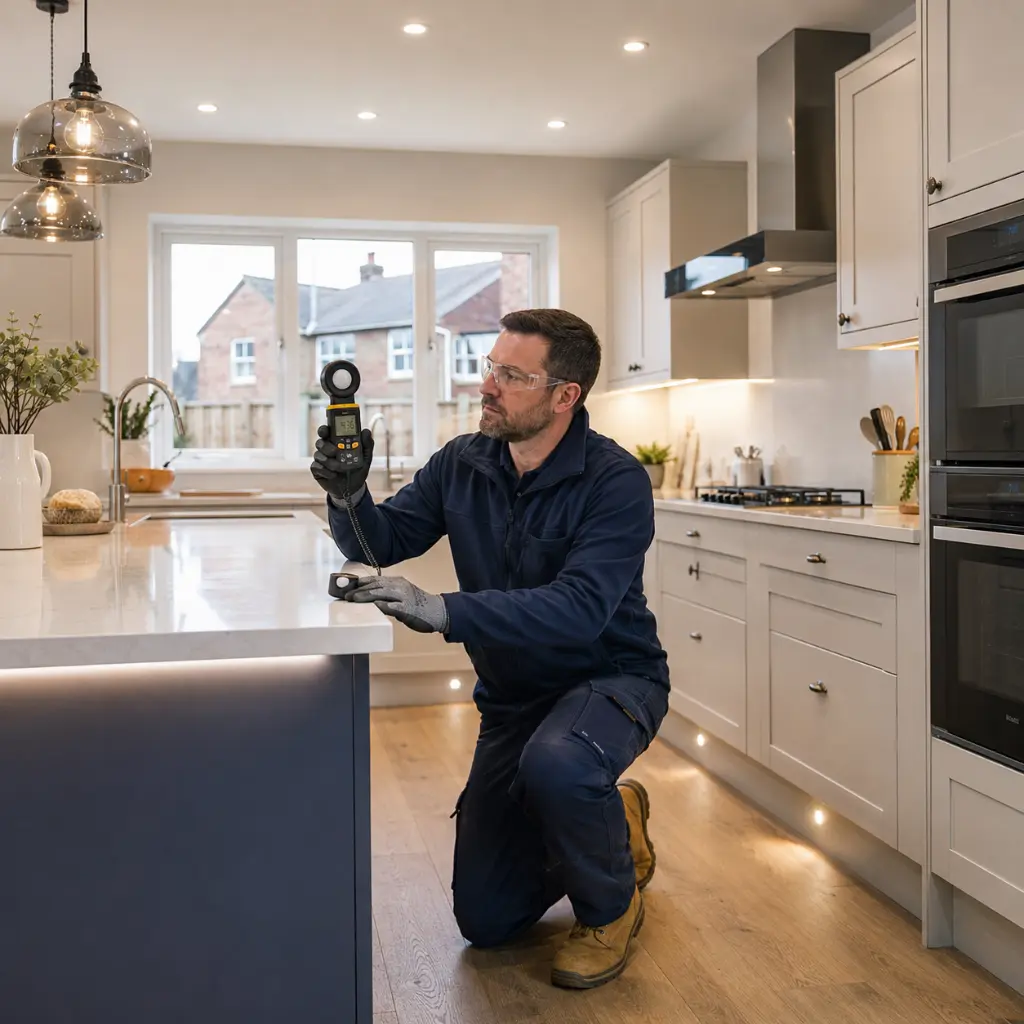
Here you need to see clearly for detailed tasks, so a brighter level works best. Pairing the right lumen output with well-designed under-cabinet kitchen lighting helps minimise shadows and provides clearer illumination across your worktops. For practical task areas such as worktops, mirrors and desks, aim for approximately 300–400 lumens per square metre to achieve bright, functional lighting.
Hallways, outdoors and security
Hallways and landings benefit from a moderate, even light so moving between rooms feels natural. Outdoor and security lighting is all about placing bright, well-directed light exactly where you want to see paths, steps and entrances.
A quick word on colour temperature
Brightness is only half of the picture, and the warmth of the light is the other half. Colour temperature decides whether a room feels cosy and golden or crisp and fresh, and it is measured separately from lumens.
Warmer tones suit lounges and bedrooms, while cooler, brighter tones tend to suit kitchens, bathrooms and workspaces. It is well worth choosing both the lumens and the colour temperature together for a result you will love.

Getting brightness right across a whole property
Choosing one bulb is easy once you know the numbers. Planning a full room, a whole home or a commercial space is where a little expertise pays off, because brightness, fitting positions, beam angles and colour temperature all need to work together for the best result.
A homeowner in the local area recently told us their new kitchen still felt a touch gloomy after fresh bulbs went in. When we looked, the bulbs were a soft, low-lumen type better suited to a lounge, so we talked through brighter, higher-lumen options that made the worktops far easier to work on.
For a coordinated result throughout your property, our team can upgrade your home or office lighting so every space gets the right level. We handle this as part of our domestic electrical services and, for larger sites, our commercial electrical and lighting work across offices, shops and industrial units.
When is it worth calling a qualified electrician?
Swapping a bulb for a brighter LED is a simple job you can enjoy doing yourself. Some lighting work benefits from a professional touch, and knowing where that line sits saves you time.
It is a good idea to call a qualified electrician when you are fitting recessed downlights, planning a new lighting layout, adding circuits or choosing dimmer-compatible drivers. If your lighting project involves additional electrical circuits or significantly increases demand, it may be worth checking whether a fuse box replacement is needed to provide the capacity and protection your installation requires. Our qualified electricians can design and install lighting systems safely and in line with current UK electrical standards.
For anything involving the ceiling, the consumer unit or a full scheme, a short conversation upfront gives you a plan that works first time. That way you get exactly the brightness you pictured, room by room.
Final thoughts
Once you think in lumens vs watts, choosing the right LED brightness becomes genuinely straightforward. Lead with lumens for the light you want, glance at watts for efficiency, and pair both with a colour temperature that suits the space.
Get those three right and every room in your Doncaster home or business feels exactly as bright and inviting as you intended. A little planning at the start makes the whole property come together wonderfully.
Plan lighting that suits every room
The right lighting can completely change how a space looks and feels. Whether you’re updating a single room or planning a full property upgrade, Rose Electrical can create a lighting solution that balances brightness, efficiency and everyday comfort.
