
Introduction
Buying a light bulb used to be simple, but the choice of warm white vs cool white now leaves many people standing in the aisle unsure which to pick. The decision matters more than you might think, as it shapes how a room looks, how relaxed or alert it feels, and how comfortable your eyes are after a long day. Brightness is only part of the story. During the darker British winter months, when we spend far more time indoors under artificial light, the colour of that light has a real effect on a home. For homeowners planning new fittings or an LED upgrade, seeking advice on lighting installation in Doncaster can help ensure each room achieves the right balance of comfort, practicality and style. This guide explains the difference between the two, where each one works best, and how to choose with confidence.
Understanding Colour Temperature
The terms warm white and cool white both describe colour temperature, which is simply the appearance of the light a bulb produces. It is measured on the Kelvin scale. Lower values sit at the warmer, more golden end, while higher values move towards a crisp, bluish white often described as daylight. The figure printed on the packaging tells you what to expect before you fit the bulb. This is why two bulbs of identical brightness can feel completely different once switched on. One may cast a soft, cosy glow, while the other delivers a clean, natural white light. Understanding this single idea makes choosing the right lighting far easier.
What Warm White Lighting Brings
Warm white LED lights produce a soft, golden tone that many people associate with comfort and calm. This is the lighting that helps a room feel welcoming at the end of the day, encouraging you to unwind rather than stay alert. It suits spaces built around relaxation and conversation, lending a cosy atmosphere that feels natural in the evening. Warm white also flatters traditional and homely interiors, complementing wood, warm paint colours and softer furnishings. If you want mood lighting that makes a space feel restful and lived in, warm white is usually the natural choice. It is gentle on the eye and easy to relax beneath.
What Cool White Lighting Offers

Cool white LED lights work in the opposite way, giving a brighter, crisper light with a clean and alert quality. This makes detail far easier to see, which is why cooler tones are favoured wherever clarity matters. Tasks that demand precision, from food preparation to close work, benefit from the sharper visibility it provides. Cool white also complements modern and minimalist spaces, sitting comfortably alongside clean lines, pale surfaces and contemporary fittings. Where warm white invites you to slow down, cool white helps you stay focused and productive. It mimics the freshness of daylight, keeping a space feeling open, functional and easy to work in.
Warm White vs Cool White at a Glance
The table below offers a quick comparison if you simply want to weigh up warm white vs cool white before deciding.
| Feature | Warm White | Cool White |
|---|---|---|
| Overall feel | Soft and golden | Crisp and bright |
| Atmosphere | Cosy and relaxing | Clean and alert |
| Best suited to | Relaxation spaces | Task focused areas |
| Common rooms | Living rooms, bedrooms | Kitchens, bathrooms, offices |
| Interior style | Traditional and homely | Modern and minimalist |
Choosing the Right White for Each Room
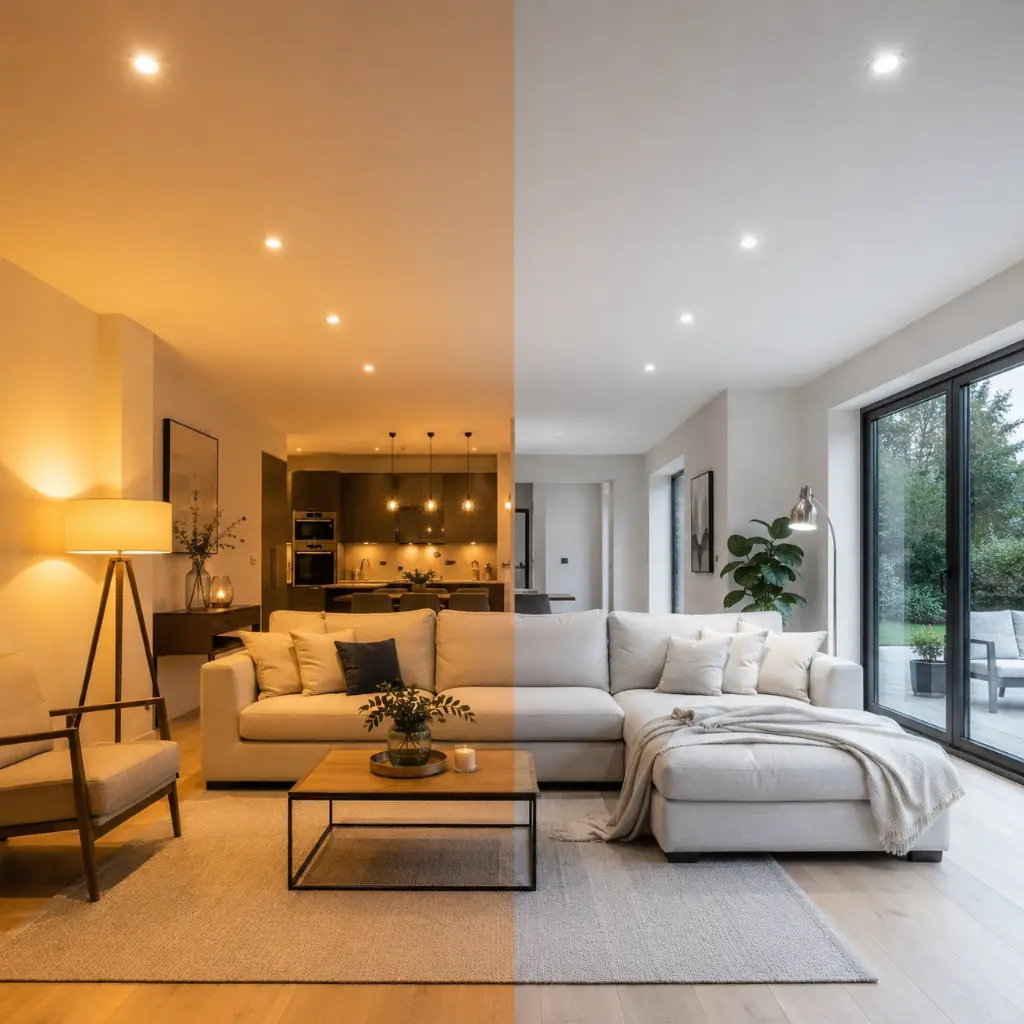
The clearest way to decide is to think room by room, matching the light to how each space is actually used.
Living Rooms and Bedrooms
These are the rooms where you relax, so warm white is usually the better fit. In a living room, it creates an inviting setting for evenings spent reading, watching television or entertaining. In a bedroom, the softer tone helps signal that the day is winding down, supporting a calmer mood before sleep. Warm white keeps both spaces feeling comfortable and restful rather than clinical.
Kitchens and Bathrooms
Kitchens and bathrooms are working spaces where visibility comes first. Cool white suits both, casting a bright, even light that makes food preparation safer and grooming far easier. In the kitchen, it helps you see clearly while chopping or cooking, and in the bathroom, it gives an accurate light for shaving or applying makeup. The crisp tone also keeps these practical rooms feeling fresh and clean.
Home Offices and Studies
Spaces set aside for work or study call for light that supports concentration. Cool white is ideal here, helping you stay alert and reducing the eye strain that can build up during long hours at a desk. It keeps a home office feeling sharp and businesslike, mirroring the bright, even lighting found in many workplaces.
Points to Weigh Before You Buy
A few practical considerations help you avoid regrets once the bulbs are fitted. In open plan areas where one room flows into another, keeping a consistent colour temperature prevents a disjointed, patchy look. It is also worth thinking about how long your lights stay on each day, as a tone you find pleasant for an hour may feel tiring over an evening. Many homes benefit from layered lighting, mixing warmer and cooler sources to suit different moments. Dimmable lighting adds further flexibility, letting you soften a bright room when you want to relax. Small choices like these make a noticeable difference to everyday visual comfort.
Planning an LED Lighting Upgrade for Your Home
A successful LED lighting upgrade involves more than simply changing bulbs. Electricians consider factors such as downlight spacing, room layout and how each area is used to create balanced, practical lighting. In kitchens, separate lighting zones often work best, combining brighter task lighting over worktops with softer ambient lighting elsewhere. Similar considerations apply to outdoor lighting, where choosing the right LED colour temperature can improve visibility and help create a more effective security lighting setup. Bathrooms require suitable fittings for areas exposed to moisture, while dimmer compatibility and LED drivers should be checked to ensure smooth, reliable performance. Professional installation helps ensure even light distribution, reliable performance and correctly positioned fittings throughout the space. For homeowners considering an LED lighting upgrade, Rose Electrical can help create and install a lighting setup that complements each room and its intended use.
Conclusion
Choosing between warm white and cool white comes down to how each room is used and the mood you want to create. Warm white brings comfort to spaces built for relaxing, while cool white delivers the clarity needed for work and detailed tasks. A thoughtful mix of both best serves many homes. If you would like guidance on getting your lighting right, Rose Electrical is always happy to help you plan an upgrade that works beautifully throughout your home.
