Introduction
Electrical safety rules are essential for maintaining a safe living environment. Electricity powers lighting, heating, appliances, and everyday devices used throughout modern homes. While these systems make daily life more convenient, improper use can lead to serious risks.
Understanding what safety rules must be followed when using electrical appliances helps homeowners prevent accidents and protect both property and occupants. Simple precautions such as checking wiring, using appliances correctly, and maintaining fittings can significantly improve electricity at home safety. Following clear safety practices helps ensure the electrical system in your home remains reliable and secure. For ongoing electrical concerns, contacting experienced electricians in Doncaster can help ensure your installation remains safe and compliant.
The Importance of Electrical Safety in UK Homes
Electricity supports most activities inside a property, from operating kitchen appliances to running heating systems and lighting. However, common electrical hazards in the home can arise when equipment is damaged or wiring is poorly maintained.
Problems such as loose plug sockets, overloaded circuits, or faulty wiring can lead to electrical shock risks or fire hazards. Maintaining good safety practices helps reduce these dangers.
Regular electrical safety checks ensure that wiring, appliances, and fittings remain in good condition. This approach supports safer residential environments and helps keep electrical installations working as intended.
1. Schedule Regular Electrical Inspections
One of the most important safety rules is arranging routine inspections of your electrical installation. A qualified electrician can inspect domestic wiring, sockets, and circuit protection systems to confirm they remain safe. Inspections may identify issues such as ageing electrical sockets, exposed wiring, or damaged fittings.
Carrying out periodic checks helps detect problems early and ensures the electrical installation continues to operate safely.
2. Avoid Overloading Electrical Circuits
Overloaded circuits are one of the common causes of electrical incidents in homes. When too many appliances are connected to a single power source, the electrical load may exceed the circuit capacity.
This can result in overheated sockets, blown fuses, or sparks from plug sockets. Managing appliance usage carefully helps prevent these problems.
To reduce risk:
- Avoid plugging multiple high power appliances into one socket
- Check appliance power requirements before use
- Monitor the electrical load when using extension leads
Managing electrical demand properly helps protect both appliances and the wiring system.
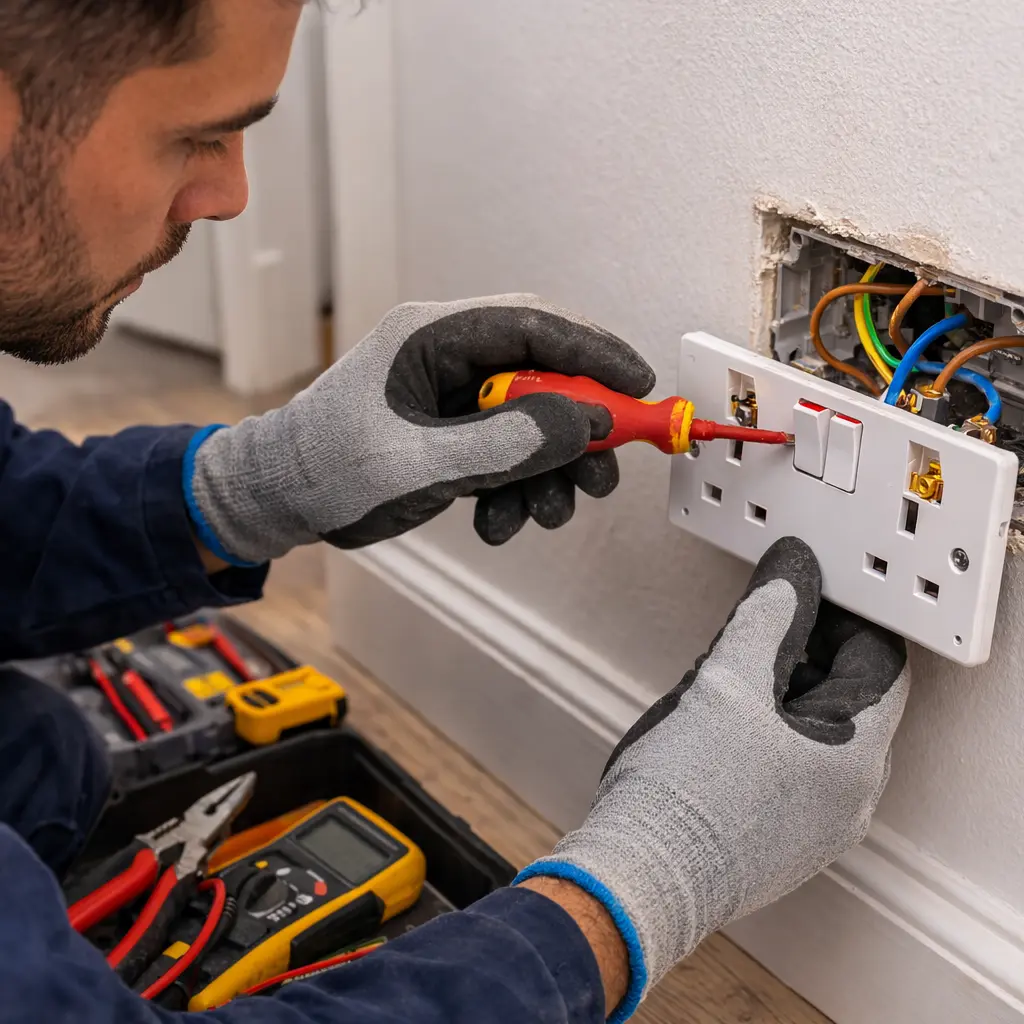
Overloaded circuits can also damage plug sockets over time. If sockets show signs of overheating or loose connections, professional electrical socket replacement may be necessary to maintain safe operation.
3. Check Electrical Cords and Plugs Regularly
Over time, cords and plugs may become damaged through regular use. Worn cables or exposed wiring increase the risk of electric shock and equipment failure.
Before using appliances, check cables and plugs for signs of damage, such as:
- Frayed insulation
- Exposed wires
- Loose plugs
- Burn marks
Replacing damaged cables promptly helps prevent accidents. Regular appliance checks also help ensure devices continue to operate safely.
4. Keep Electrical Equipment Away from Water
Water and electricity should never mix. Appliances should always be kept away from sinks, bathrooms, and damp environments to prevent electric shock.
Moisture can damage internal electrical components and create serious safety risks. In the UK climate, where damp conditions and condensation are common, careful placement of electrical equipment is especially important.
Keeping appliances dry helps maintain safe operation and prevents unnecessary electrical hazards.
5. Install Residual Current Devices for Protection
Residual Current Devices provide an additional level of electrical protection. These safety devices automatically disconnect the power supply if a fault is detected.
RCD protection helps reduce the risk of electric shock and improves safety in areas where electrical equipment may come into contact with moisture.
Modern consumer units commonly include this protection as part of their circuit safety systems, helping ensure reliable power distribution throughout the property.
6. Turn Off Appliances When Not in Use
Switching off appliances when they are not being used is a simple but effective safety habit. Devices that remain powered can continue drawing electricity and generate heat.
Turning off unused equipment reduces energy consumption and lowers the chance of overheating electrical sockets or appliances.
Leaving appliances switched on unnecessarily can also increase your electricity bill over time. If you notice your electricity bill becoming unusually high, it may be worth checking appliances and electrical equipment for excessive power consumption.
This practice also protects equipment from unexpected power issues and contributes to safer everyday electricity use in the home.
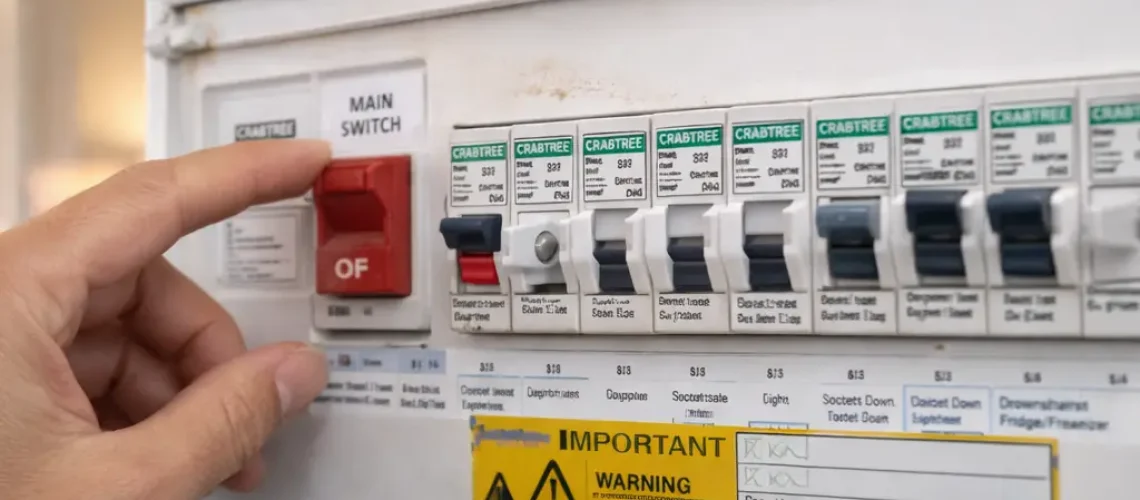
7. Know the Location of Your Consumer unit
The consumer unit controls the electrical supply throughout the property. Understanding its location allows homeowners to respond quickly if a power problem occurs.
If circuits trip or fuses blow repeatedly, it may indicate a wiring fault or electrical overload. In such situations, it is advisable to arrange a professional inspection.
Prompt electrical fault detection helps restore a normal power supply and prevents further complications.
8. Protect Children and Pets from Electrical Risks
Children and pets may accidentally interact with plug sockets or cables if these areas are left exposed. Taking precautions helps reduce the likelihood of accidents.
Simple protective measures include:
- Using socket covers where appropriate
- Keeping cables tidy and secured
- Avoiding trailing leads in busy areas
Maintaining an organised environment helps create safer living spaces and minimises potential electrical risks.
Understanding basic electrical safety practices can help homeowners reduce risks and maintain a safer electrical environment within their property.

9. Use Certified Electrical Equipment
Electrical appliances should always meet recognised safety standards. Low-quality or poorly manufactured equipment may not provide adequate protection during use.
Using approved appliances helps maintain safe electrical installations and reduces the chance of equipment failure. It also ensures compatibility with domestic wiring systems.
Regular checks of appliances help identify wear or damage that may develop over time.
10. Use Qualified Electricians for Electrical Work
For safety reasons, repairs and installations should be handled by qualified professionals. Attempting electrical work without training can create serious safety hazards.
Qualified electricians can safely perform inspections, repairs, and electrical troubleshooting when problems arise.
Conclusion
Maintaining safe electrical practices is an essential responsibility for every homeowner. Regular inspections, careful appliance use, and proper maintenance all contribute to safer living conditions.
Understanding what safety rules must be followed when using electrical appliances helps reduce risks and ensures electrical systems continue to function reliably. Addressing concerns promptly also prevents minor problems from becoming serious hazards.
If you notice unusual electrical behaviour or suspect a fault within your installation, contacting Rose Electrical for professional advice and inspection can help keep your property safe and your electrical systems operating properly.
